
Ptosis Correction Surgery: Procedure, Candidacy and Recovery
The technique is chosen from the cause and severity of the drooping, not named in advance. Here is the published picture of ptosis correction at IBON Plastic Surgery.
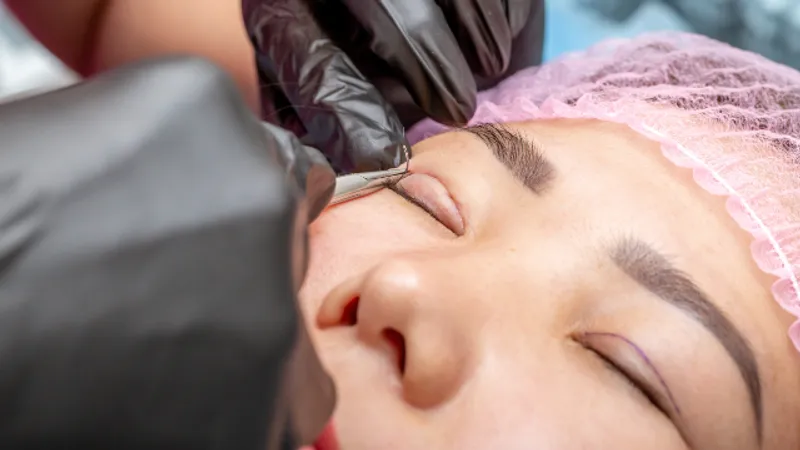
Ptosis Correction Surgery: Procedure, Candidacy, and Recovery Explained
Medically reviewed by Dr. Kim Ju-Chan, Board-Certified Plastic Surgeon
Ptosis correction is the one operation on IBON Plastic Surgery's eyelid menu where the technique genuinely cannot be named before the examination. The published description says why: depending on the cause and severity of the drooping, the surgeon strengthens or advances the eyelid-lifting muscle, or uses another suitable technique. Two variables decide the operation, and neither is visible from outside. This guide sets out what the clinic publishes, and what that means for a patient trying to plan.
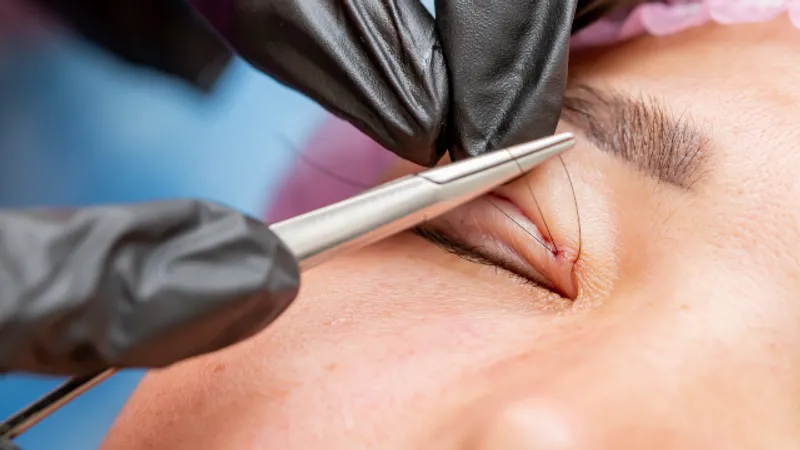
What the Operation Addresses
The clinic describes ptosis correction as a surgical procedure that addresses drooping eyelids to improve vision and aesthetics by tightening the muscles that lift the eyelid, producing a refreshed look.
Note that both purposes appear in one sentence — sight and appearance. That is unusual on an aesthetic menu and it reflects what the condition is: a lid that sits low enough to matter can affect what you see as well as how you look.
Patients are described as seeking treatment to improve drooping eyelids and achieve a more open, balanced appearance.
Who Is a Candidate
The candidate description is unusually specific about cause.
Adults with drooping upper eyelids caused by eyelid-lifting muscle or tendon weakness may be candidates after examination.
That clause does a lot. It excludes, by definition, a lid that sits low for other reasons — skin resting on it, or a brow that has descended. Those are different findings with different operations, and the examination is what separates them.
Unsuitability is described briefly: patients with uncontrolled eye conditions or medical issues that make surgery unsafe may need postponement or alternative care.
What the Examination Measures
Two published descriptions overlap here, and together they give a clear picture.
The consultation is described as evaluating eyelid drooping, eyelid movement, muscle function, and eye health, in order to plan treatment.
The procedure's own first step goes further: the surgeon evaluates eyelid position, levator muscle function, skin, and the degree of drooping to determine the appropriate surgical approach.
Four measurements, and the two that matter most cannot be self-assessed. Levator muscle function is how strongly the lid can lift itself. Degree of drooping is how far it has fallen. Two people whose lids look equally low can differ on both, and the operation they need differs accordingly.
The Published Steps
The clinic sets the procedure out in three movements.
Consultation and eyelid assessment. Eyelid position, levator muscle function, skin, and the degree of drooping are evaluated to determine the surgical approach.
Anesthesia. Local anesthesia, sometimes with sedation, is administered to keep the patient comfortable during surgery.
Surgical correction. Depending on the cause and severity, the surgeon strengthens or advances the eyelid-lifting muscle, or uses another suitable technique to improve the eyelid opening.
That third step is where the individuality sits. "Strengthens or advances, or another suitable technique" is not vagueness — it is an accurate description of an operation whose form is set by a measurement taken shortly before it.
Anesthesia
The clinic's fuller position is that local anesthesia may be used, with sedation or other pain control depending on the surgical plan.
MedlinePlus, the U.S. National Library of Medicine's consumer health service, explains the terms. A local anesthetic numbs a limited area and leaves you awake. Sedation, when added, reduces awareness in graded steps rather than switching it off, running from relaxed at one end to deeply drowsy at the other.
For this procedure there is a practical reason to ask exactly where on that range your plan sits: an operation that adjusts how far a lid opens sometimes benefits from a patient who can cooperate during it. That is a question for your surgeon rather than an assumption, but it is worth raising.
Why "Cause and Severity" Is Two Questions
The phrase governs the whole operation, and it is worth splitting.
Cause asks where the weakness is. The clinic names the eyelid-lifting muscle or its tendon, which are different structures with different behavior, and the approach follows from which one is involved.
Severity asks how much correction is needed. A lid a little low and a lid substantially low are the same diagnosis at different magnitudes, and the amount of adjustment differs accordingly.
Two patients can share a cause and differ on severity, or share a severity and differ on cause. That is four combinations from two variables, and it is the honest reason the published description does not name a single technique.
For you the useful consequence is that "what operation will I have?" is a question with an answer — after the measurement, not before it. A clinic that names the technique before examining you has skipped the step that chooses it.
The Functional Half
Most of this menu is aesthetic. This procedure sits partly outside that, and the published material says so in its first sentence: the operation addresses drooping eyelids to improve vision and aesthetics.
The approved claims language goes further, describing ptosis correction as a recognized medical and cosmetic treatment.
What that means practically is that two different conversations can happen at the same consultation. One is about how the eye looks. The other is about whether the lid is interfering with what you see — and the second has its own measurement in the examination, since the degree of drooping is assessed directly.
If sight is part of why you are considering this, say so explicitly. It is relevant information for the plan and it is easy to leave out of a conversation framed as cosmetic.
What Can Go Wrong
The disclosed risks are asymmetry, under- or overcorrection, dry eyes, and recurrence.
Short list, and every item on it is specific to what this operation does.
Under- or overcorrection is the vocabulary of an adjustment. A lid can be set to open too little or too much, and the margin between them is small.
Asymmetry follows from the same fact applied to two lids that began differently.
Recurrence describes the lid drifting back toward where it started over time.
Dry eyes is the one patients underestimate. MedlinePlus explains why the tear film matters: blinking spreads tears across the eye's surface to clean and moisten it, which is a vision issue before it is a comfort one. An operation that changes how far and how often a lid closes over the eye is an operation with a relationship to that film. Raise any existing dryness at the consultation.
Recovery
Swelling and bruising may improve over several weeks, while the final result can take longer, with individual recovery varying.
That is a slower description than the crease procedures carry, and it is worth planning around rather than being surprised by. Several weeks for the visible recovery, and longer than that before the lid position is settled.
Improvement is described as visible as swelling settles, with longevity depending on eyelid function, aging, and individual factors.
Duration and visit requirements are listed as matters to confirm with the clinic, which makes them consultation questions rather than things to assume when booking travel.
MedlinePlus sets the ordinary expectation: some discomfort is usual after a procedure, with swelling and soreness around the treated area, and the practical step is to ask your own clinician what to expect in your case and when normal activity becomes reasonable again.
Preparation and Aftercare
Preparation follows the surgeon's instructions on medications, medical history, and eye health before surgery.
Aftercare is described in more detail than for several other procedures: follow the instructions for wound care, prescribed medications, cold compresses, and keeping the eyelids clean; avoid rubbing the eyes, strenuous activities, and makeup until cleared; and attend the scheduled follow-up visits to monitor healing and eyelid function.
That last phrase is specific to this operation. The follow-up is not only watching a wound heal — it is watching how the lid works.
What the Result Can Be
The clinic describes possible benefits as improved eyelid opening and a more balanced eye appearance, with results varying according to eyelid anatomy and muscle function.
The second half of that sentence is the ceiling, and it is set by the same measurement that chose the technique. A lid with weaker muscle function has less to work with, which is why the examination is both the diagnosis and the prognosis.
Planning a Trip Around It
Two published facts make this procedure harder to schedule than its neighbors, and both are worth knowing early.
Duration and visit requirements are listed as matters to confirm with the clinic rather than published figures. So the trip cannot be sized from the website.
And recovery is described in weeks rather than days — swelling and bruising improving over several weeks, with the final result taking longer still. That is a different shape from the crease procedures, where the visible recovery is largely done inside a fortnight.
The consequence is not that the trip must be long. It is that the schedule has to come from the consultation, and that the result you fly home with will be an early one. Ask what the surgeon expects to see at each follow-up, and what would make them want you back before you go.
Questions Worth Asking
- What is my levator function, and what does that number mean for what is possible?
- How severe is my drooping, and which technique does that point to?
- What would under- or overcorrection look like in my case, and what is done about it?
- Do I have any dry-eye history that changes the plan?
- How long should I expect before the lid position is settled?
MedlinePlus recommends preparing questions in advance, listing medicines, supplements, and allergies, and taking notes during the appointment. StatPearls describes consent as a discussion covering the nature of the intervention, its balance of risk and benefit, and the alternatives — which here include a different eyelid operation, or continuing to observe.
Written enquiries go in at the contact page, and patient accounts the practice has published are gathered on the customer reviews page.
The Bottom Line
- The operation tightens the muscles that lift the eyelid, and the clinic describes it as addressing both vision and appearance.
- Candidacy is defined by cause: drooping caused by eyelid-lifting muscle or tendon weakness, confirmed by examination.
- The assessment measures eyelid position, levator muscle function, skin, and the degree of drooping.
- The technique follows from the cause and severity — strengthening or advancing the lifting muscle, or another suitable approach.
- Disclosed risks are asymmetry, under- or overcorrection, dry eyes, and recurrence; recovery is described as swelling and bruising improving over several weeks with the final result taking longer.
Frequently Asked Questions
What does ptosis correction do?
It addresses drooping eyelids by tightening the muscles that lift the eyelid, described by the clinic as improving both vision and appearance.
Who is a candidate?
Adults whose upper eyelids droop because of eyelid-lifting muscle or tendon weakness, confirmed by examination.
How is the technique chosen?
From the cause and severity of the drooping. The surgeon strengthens or advances the eyelid-lifting muscle, or uses another suitable technique.
What is measured beforehand?
Eyelid position, levator muscle function, skin, and the degree of drooping, alongside eyelid movement and eye health.
What are the risks?
Asymmetry, under- or overcorrection, dry eyes, and recurrence.
How long is the recovery?
Swelling and bruising may improve over several weeks, with the final result taking longer and individual recovery varying. Duration and visit requirements are confirmed with the clinic.
Will the result last?
Improvement becomes visible as swelling settles, with longevity depending on eyelid function, aging, and individual factors.
This article is for general informational purposes and does not constitute individualized medical advice, and it is not a self-diagnosis tool. Surgical candidacy, technique, and expected outcomes can only be determined through a consultation with a qualified plastic surgeon.
References & Sources
- MedlinePlus — Eyelid Disorders
- MedlinePlus — Tears
- MedlinePlus — Anesthesia
- MedlinePlus — After Surgery
- StatPearls — Informed Consent
Schedule a 1:1 Consultation with Dr. Ju-Chan Kim
Have questions about recovery time, surgical planning, or transparent pricing in Busan? Contact our international patient team today.
Book Consultation →