
Ptosis Correction in Korea: Functional, Cosmetic, and Budget
Ptosis correction sits between function and appearance, and that shapes both the plan and the budget. Here is what US patients should establish before booking.
Ptosis Correction Cost for US Patients: Pricing, Inclusions, and What to Budget For
Medically reviewed by Dr. Kim Ju-Chan, Board-Certified Plastic Surgeon
The question American patients put to IBON Plastic Surgery about ptosis correction arrives in two halves, and the clinic's own record of its most-asked questions keeps them together: what does it cost, and is it suitable for functional as well as cosmetic concerns? The second half shapes the first, because a drooping eyelid is not only an appearance problem, and a plan built around one framing looks different from a plan built around the other. This article works through that distinction and then through what belongs in the budget.
Function and Appearance Are Not Alternatives Here
Start with what the eyelid does. MedlinePlus, the U.S. National Library of Medicine's consumer health service, describes eyelid disorders as a family of conditions that can affect how eyelids look or move, including problems of eyelid position — and it notes that eyelids protect the eye, spread tears at every blink, and help clear dirt and dust.
That is why ptosis sits awkwardly in the category of cosmetic surgery. An eyelid that sits low changes a face, and it can also sit in the way.
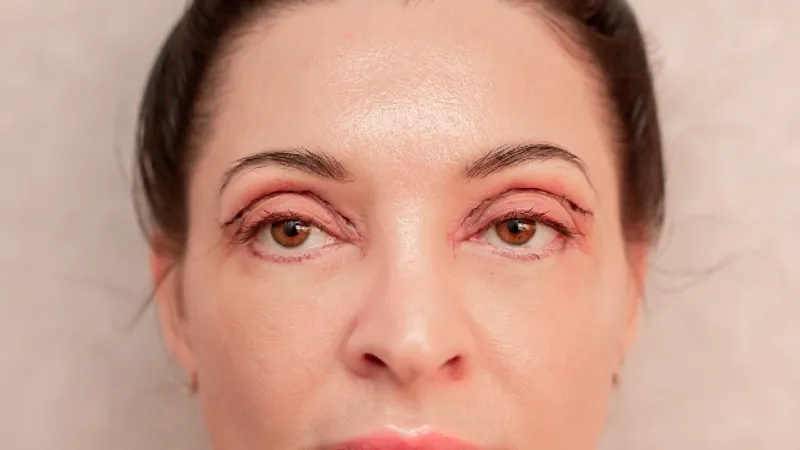
The clinic's approved description of the procedure covers both sides. It describes ptosis correction as elevating drooping eyelids, addressing obscured vision, and producing a clearer, more awake eye contour, and it frames the procedure as addressing aesthetic and functional concerns together rather than treating them as competing goals. Upper visual field obstruction is named specifically among the things the procedure addresses.
Read plainly, that means a patient can arrive with either concern, or both, and the assessment will look at the same structures either way.
Why the Assessment Drives Everything Downstream
Ptosis correction is a muscle operation, not a skin operation, and that distinction is the reason the examination matters so much.
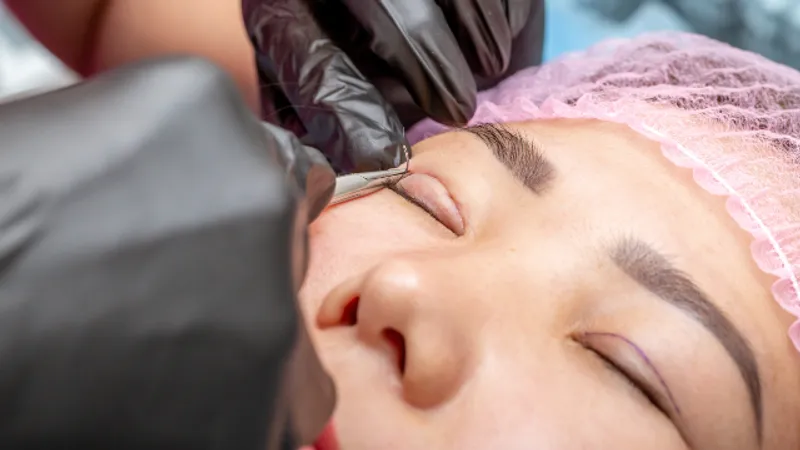
The clinic's published sequence begins with an eye examination in which the doctor checks eyelid position and muscle strength. Anesthesia follows — local anesthesia to numb the eyelid, sometimes with sedation. A small incision is made in the natural eyelid crease, and the eyelid-lifting muscle is adjusted. For its ptosis correction service the clinic sets out four things the surgeon weighs before choosing an approach: where the lid actually sits, how strong the lifting muscle is, the condition of the skin, and how far the lid has dropped.
Levator function is the variable a patient cannot assess in a mirror and a photograph cannot show. Two people whose eyelids look equally low may have very different muscle strength, and the amount of adjustment required — and therefore the complexity of the operation — follows from that measurement rather than from the appearance.
Which is the practical answer to "what will it cost." A plan that depends on a measurement nobody has taken yet cannot be priced yet, and any figure offered before that measurement describes a different patient.
What the Procedure Involves, Practically
The clinic's published parameters give you the shape of the commitment.
The operation generally takes forty-five to ninety minutes and is performed on an outpatient basis; elsewhere the clinic describes ptosis surgery as commonly taking around one to two hours depending on technique. Consultation, surgery, and follow-up visits are all required. Out-of-town patients typically need to remain in Korea for about a week for postoperative checks and stitch removal.
Recovery follows a documented pattern. Bruising and swelling are at their worst in the first few days, then fall away markedly across the fortnight that follows. Light everyday activity generally resumes inside the first ten days, while the tissues themselves keep settling for one to three months.
Those numbers are worth holding onto, because they are the ones that turn into travel decisions. A procedure needing roughly a week in country before the surgeon will sign off on air travel is a different trip from a day-case appointment, and the difference lands in your budget rather than in the clinic's.
What Belongs in a Ptosis Budget
Approach it in three layers rather than as one number.
The clinical layer. What the clinic's quotation addresses. The clinic's own research names the components a detailed written quotation sets out, and the way to establish where its boundary falls is to ask for it in writing before you travel.
The stay layer. Accommodation for the full in-country period rather than for the surgery date, local transport for the return visits, meals, and a companion's costs if someone comes with you. This layer scales with the number of days the plan requires, which is why the visit count is a financial question as much as a clinical one.
The afterwards layer. The CDC is direct about this one: travelers should establish before departure that they can obtain any follow-up care they need at home, and it notes that treating a complication after returning happens in the United States, may take a prolonged course, and may not be covered by insurance. It recommends reviewing your policy in advance, planning for the possibility of paying yourself, and obtaining international travel health cover that includes medical evacuation.
Most unpleasant financial surprises in medical travel come from the second and third layers, not the first.

Where the Functional Framing Changes the Plan
Patients sometimes assume the functional-versus-cosmetic distinction is purely administrative — a label attached afterward for someone else's benefit. It is not. It changes what the surgeon is optimizing for.
Where the concern is chiefly appearance, the target is a contour: a lid height and shape that suit the face, symmetrical enough to look unremarkable. Where the concern includes an obstructed field of view, the target includes clearing the visual axis, and that is a functional endpoint measured differently.
Most real cases contain both, which is why the clinic's framing keeps them together rather than asking a patient to choose. But the balance between them belongs in the consultation, because it affects how much correction is appropriate. Lifting a lid further than a face needs is not a neutral act — overcorrection appears in the clinic's own disclosed risk list, and an eyelid that no longer closes comfortably is a functional problem created in pursuit of an aesthetic one.
There is a practical version of this for the consultation. Say which of the two brought you in, and say it in your own words: whether you are bothered by how your eyes read to other people, or by the top of your field of view, or by both and in what proportion. That sentence does more to shape a sensible plan than any procedure name.
It also tells the surgeon what a disappointing outcome would look like for you specifically, which is the information most often missing from a consultation and most often regretted afterward.
Questions to Settle Before You Book
- Based on my photographs, does this look like a case where levator function is likely to be the deciding factor?
- What would the assessment have to find for you to recommend a different procedure instead?
- How many days would you expect me to stay, and how many visits does that include?
- What is in the written quotation, and what sits outside it?
- What changes if the in-person examination finds something the photographs did not show?
- What are the specific risks in my case, as opposed to the general list?
That last question matters here because the risks are procedure-specific. The clinic discloses undercorrection, overcorrection, asymmetry, infection, bleeding, dry eyes, eyelid closure problems, and the possible need for revision surgery for ptosis correction, and for its ptosis service it names asymmetry, under- or overcorrection, dry eyes, and recurrence.
Under- and overcorrection deserve particular attention in a budget conversation, because either can lead to a second procedure, and a second procedure is a second trip.
MedlinePlus's general advice for any appointment applies: list your medicines, supplements and allergies, write your questions down beforehand, and take notes during the visit. It also suggests asking what help you might need at home afterward and when you can return to work — practical answers that carry costs no quotation covers.
A Note on What This Article Avoids
There is no figure here, and that is deliberate rather than evasive. Surgical fees vary with technique, individual complexity, and time, and a number published by anyone who has not examined your eyelids is a guess.
There is also nothing here about what any insurer will or will not cover. Coverage decisions for a procedure with both functional and aesthetic dimensions are made by your insurer against your policy, and the only reliable way to find out is to ask them directly, in writing, before you travel. Anything else is speculation about your own money.
What is worth doing before that conversation is gathering the documentation. StatPearls describes informed consent as a communication process covering what an intervention involves, its risks and benefits, and the alternatives available, with documentation as part of that process rather than a substitute for it. A clear record of what was assessed, what was recommended, and why is useful clinically — and it is the material any other conversation about the procedure will need.
You can open a written exchange through the clinic's contact page, and its stated approach to individual planning is described on its about us page.
The Bottom Line
- Ptosis correction is framed by the clinic as addressing aesthetic and functional concerns together, including upper visual field obstruction, rather than as a purely cosmetic procedure.
- The plan follows an examination of eyelid position, levator muscle function, skin, and the degree of drooping — none of which a photograph or a mirror can measure, which is why a figure cannot precede the assessment.
- The operation generally takes forty-five to ninety minutes on an outpatient basis, and out-of-town patients typically stay in Korea about a week for checks and stitch removal.
- Budget in three layers: the clinical quotation, the cost of the days in country, and the cost of any care you need after returning home.
- The CDC advises arranging U.S. follow-up care before travel and reviewing what your policy covers; the clinic separately discloses under- and overcorrection among the risks, either of which can mean a further procedure.
Frequently Asked Questions
Is ptosis correction cosmetic or functional?
The clinic describes it as addressing both. Its approved description covers elevating drooping eyelids, addressing obscured vision including upper visual field obstruction, and producing a clearer, more awake eye contour.
Why can no one quote me a figure in advance?
Because the plan depends on measurements taken during examination — eyelid position, levator muscle function, skin, and the degree of drooping. Complexity follows from those findings rather than from how the eyelid looks in a photograph.
How long does the operation take?
The clinic describes the procedure as generally taking forty-five to ninety minutes on an outpatient basis, and elsewhere as commonly around one to two hours depending on technique. Consultation, surgery and follow-up visits are all required.
How long will I need to stay in Korea?
Out-of-town patients typically need about a week for postoperative checks and stitch removal. Confirm the schedule for your own plan with the clinic before booking travel.
What does recovery look like?
The clinic describes bruising and swelling at their worst in the first few days and falling away markedly over the following fortnight, with light everyday activity generally resuming inside ten days and the tissues settling across one to three months.
What are the risks specific to ptosis correction?
The clinic discloses undercorrection, overcorrection, asymmetry, infection, bleeding, dry eyes, eyelid closure problems, and the possible need for revision surgery. Under- and overcorrection matter financially as well as clinically, since either can lead to a further procedure.
Will my insurance cover it?
That is a question for your insurer, answered against your own policy, and worth asking in writing before you travel. The CDC separately advises confirming in advance that you can obtain any follow-up care you need at home, and reviewing what your policy covers.
This article is for general informational purposes and does not constitute individualized medical advice, and it is not a self-diagnosis tool. Surgical candidacy, technique, and expected outcomes can only be determined through a consultation with a qualified plastic surgeon.
References & Sources
- MedlinePlus — Eyelid Disorders
- MedlinePlus — Anesthesia
- MedlinePlus — Surgery
- MedlinePlus — Talking With Your Doctor
- CDC Travelers' Health — Medical Tourism
- StatPearls — Informed Consent
Schedule a 1:1 Consultation with Dr. Ju-Chan Kim
Have questions about recovery time, surgical planning, or transparent pricing in Busan? Contact our international patient team today.
Book Consultation →