
Partial Incision Double Eyelid Surgery: Procedure and Candidacy
Small openings at selected points rather than one continuous cut — the full published picture of partial incision double eyelid surgery at IBON Plastic Surgery.

Partial (Minimal) Incision Double Eyelid Surgery: Procedure Guide and Candidacy
Medically reviewed by Dr. Kim Ju-Chan, Board-Certified Plastic Surgeon
Between a crease held by sutures and a crease built through a full-length opening sits a third option, and IBON Plastic Surgery describes it in a way that makes its logic clear. The lid is entered through limited incisions rather than one continuous cut, and through those small openings the surgeon can still adjust what is underneath. This guide sets out the published picture — what happens, who it suits, where it stops being appropriate, and what recovery looks like.
What the Operation Is
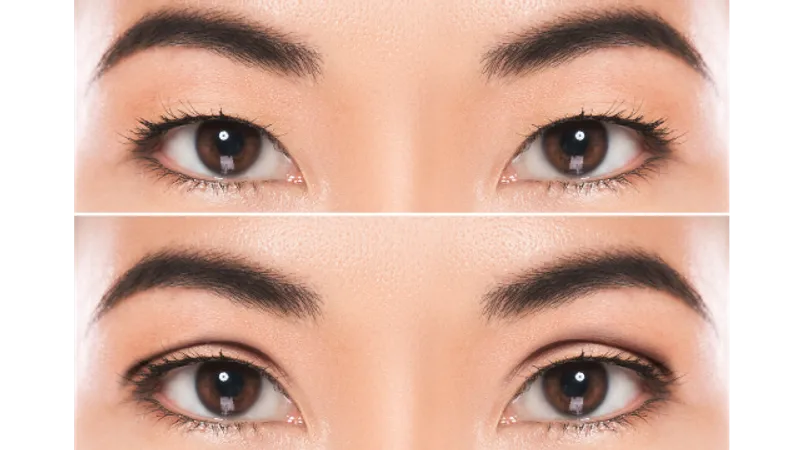
The clinic describes it as a minimally invasive double-eyelid operation that creates a new upper-eyelid crease through limited incisions rather than a continuous full-length incision. Depending on the patient's eyelid anatomy, excess fat, muscle, or connective tissue can be adjusted through the small openings, while fixation is used to create the desired crease.
That sentence contains the whole design. Limited access, real capability through it, and a fold held in place at the end.
Patients are described as considering the technique when they want a defined double eyelid crease with a less extensive incision, with individual suitability depending on eyelid anatomy and consultation.
The Five Published Steps
The clinic numbers this procedure, which it does not do for every service.
- Design. The desired crease is determined against eye shape and facial balance.
- Limited incision. Small openings are made along selected points of the planned crease.
- Tissue adjustment. Where necessary, excess fat, muscle or connective tissue is removed or adjusted.
- Fixation. The eyelid tissues are connected and fixed to create the crease.
- Closure. The small incision sites are closed, with symmetry and the crease checked.
Steps three and four are the ones that distinguish this operation. A purely suture-based method does not have step three; a full-incision method reaches step three through a continuous opening rather than through selected points.
Who It Suits
Candidacy is described in terms of the lid's contents: patients with suitable eyelid skin, fat volume, and crease characteristics who want partial-incision surgery, with a surgeon confirming suitability.
Three variables, all of them quantities. How much skin, how much fat, and what the crease is currently doing.
Where It Stops Being Appropriate
The clinic states this plainly rather than by implication, and it is the most useful paragraph in the published material.
This technique is not automatically appropriate for every eyelid. Four findings are named as pointing elsewhere: substantial excess skin, significant eyelid laxity, very thick or heavy eyelids, and more complex structural problems.
Where any of those is present, the clinic states that a full-incision approach or another procedure may be required. Significant ptosis is named separately again, as possibly calling for ptosis correction rather than crease creation on its own.
Read that as a statement about access. Small openings are enough to adjust tissue; they are not enough to remove a great deal of it. Where there is a lot to take away, the answer is not a longer operation through the same holes — it is a different operation.
The ptosis clause is separate and worth noticing on its own. A lid that will not lift properly has a problem no crease technique addresses.
Benefits, Stated With Their Limits
The clinic's benefits row is unusually candid, and the caveat at the end of it is the part to read.
Potential benefits: a defined double-eyelid crease, a less extensive incision than full-incision surgery, the ability to address some eyelid fullness or fat, and generally less tissue disruption. The clinic describes partial-incision methods as designed to combine some advantages of the non-incisional and full-incision approaches.
Then the qualifier: results vary with anatomy, and "minimal incision" does not mean scar-free.
That last clause does real work. A smaller opening is still an opening, and the risk list below names incision or scar visibility explicitly.
What Fixation Means for the Result
Step four deserves unpacking, because it is where this operation's long-term behavior is decided.
Fixation connects and fixes the eyelid tissues so that the crease forms. A fold produced this way exists because tissues have been joined in a new relationship — which is a different proposition from a fold produced by removing what was in the way.
That is why crease loosening or loss sits on the complication list. A join can slacken. It is also why the exclusion criteria are written around quantity: the more tissue sitting above a fixed fold, the more work the fixation is being asked to do.
None of this argues against the technique. It argues for matching it to a lid whose contents it can manage, which is exactly what the assessment is measuring.
A Middle Option, With the Trade That Implies
The clinic describes partial-incision methods as designed to combine some advantages of non-incisional and full-incision surgery. Worth taking seriously and worth reading carefully.
What it takes from the suture side: a less extensive incision, generally less tissue disruption, and a recovery described in days to a couple of weeks rather than longer.
What it takes from the incision side: real access to fat, muscle, and connective tissue through the openings, so a lid with some fullness is not automatically excluded.
What it cannot take from either: the capacity of a full-length opening to remove a large amount of skin, and the absence of any external opening at all. A middle option is genuinely in the middle — better than both at nothing, useful between them.
The practical reading for a patient is that this technique suits a specific band of anatomy. Above that band the exclusion list applies; below it, a simpler approach may do everything you need.
Anesthesia
The clinic lists anesthesia for this procedure as something to confirm directly rather than publishing a standard arrangement.
MedlinePlus, the U.S. National Library of Medicine's consumer health service, describes what the options mean in practice: a local anesthetic numbs a limited area while you stay awake, and sedation — where it is added — reduces awareness in graded steps rather than as a single state. Ask which applies to your plan and at what level.
What Can Go Wrong
The disclosure runs in two tiers, as elsewhere, and the second tier is technique-specific.
Early: temporary swelling, bruising, tightness, discomfort, asymmetry, and visibility of the incision or scar.
Then: infection, bleeding, inflammation, crease asymmetry, crease loosening or loss, over- or under-correction, and dissatisfaction with the final shape.
Two items belong to this technique in particular. Crease loosening or loss is the vocabulary of a fold held by fixation. Over- or under-correction is the vocabulary of an adjustment that can be set too far in either direction. Both become likelier the further an eyelid sits from what the technique suits — which is the practical reason the exclusion list above matters to you rather than only to the surgeon.
Recovery
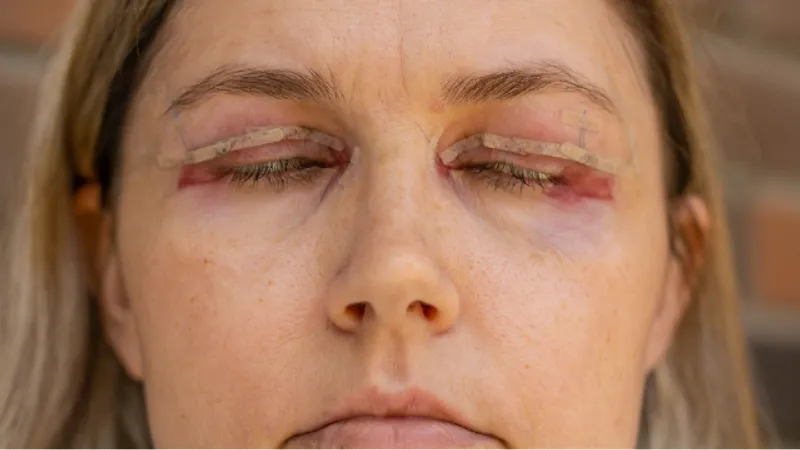
The clinic gives approximately five days in one place and one to two weeks in another, describing both as general references rather than commitments.
Sutures come out around day five to seven, and the operation itself takes approximately thirty to sixty minutes.
What the crease does is described separately and is worth knowing before the first week: it becomes visible immediately but is usually swollen and uneven at first. As swelling decreases it progressively looks more natural, and final maturation can take several weeks to months.
So there are two timelines running — a week or two for the visible recovery, and weeks to months for the fold to finish. Judging the result on the first is judging swelling.
Preparation and Aftercare
Preparation follows the clinic's individual instructions on medications, supplements, smoking and alcohol, food and drink, contact lenses, and makeup — with one caution stated explicitly: medication changes should only be made under medical guidance. If you take something regularly, the decision to pause it is not yours to make alone.
Aftercare is described as keeping the incision clean with prescribed medication or ointment, avoiding rubbing or pressure on the eyes, managing swelling according to the surgeon's instructions, and attending follow-up appointments.
The clinic also names what should send you back rather than make you wait: increasing pain, significant bleeding, spreading redness, discharge, fever, or visual changes. Those apply on any day of recovery.
MedlinePlus sets the general expectation — discomfort is usual after a procedure, with swelling and soreness around the treated area — and recommends asking your own clinician what to expect and when ordinary activity becomes reasonable again.
If You Are Traveling for It
Two published details set the shape of a trip.
Suture removal puts a fixed appointment in the calendar and therefore a floor under the stay. And the final maturation of the crease runs several weeks to months, which means the result goes home with you unfinished.
That second point is worth accepting in advance rather than discovering. The fold you leave with is a fold in progress, and photographs taken then are photographs of swelling.
Ask for the follow-up schedule before booking flights rather than after, and ask what the surgeon would want to see you about between visits.
Questions Worth Asking
- Given my skin, fat volume, and current crease, is this technique the right amount of access for my lid?
- How much tissue do you expect to adjust through the openings?
- What would make you recommend a full incision instead?
- Will sutures need removing, and on what day?
- When should I judge the crease?
MedlinePlus recommends preparing questions before the appointment, bringing a list of medicines, supplements, and allergies, and taking notes during it. StatPearls treats consent as a discussion of the intervention, the balance of its risks and benefits, and the alternatives — which here are a different crease technique, a different operation entirely, or none.
Written questions reach the practice at its contact page, and the way it describes planning each case individually is on the about us page.
The Bottom Line
- The crease is created through limited incisions at selected points rather than one continuous full-length incision, with fixation forming the fold.
- Excess fat, muscle, or connective tissue can be adjusted through those small openings where the anatomy allows.
- Four findings point elsewhere: a lot of excess skin, marked lid laxity, lids that are very thick or heavy, and structural problems of greater complexity. Marked ptosis is named separately as possibly calling for ptosis correction.
- The clinic states plainly that "minimal incision" does not mean scar-free, and incision or scar visibility is on the disclosed list.
- Recovery is given as approximately five days in one place and one to two weeks in another, both as general references, with sutures out around day five to seven and final maturation taking weeks to months.
Frequently Asked Questions
How is this different from a full incision?
The lid is entered through small openings along selected points of the planned crease rather than through one continuous full-length incision, with fixation used to form the fold.
Can fat be removed through the openings?
Where the anatomy allows. The clinic describes excess fat, muscle, or connective tissue being adjusted through the small openings depending on eyelid anatomy.
Who is not suitable?
Four findings point away from it: a lot of excess skin, marked lid laxity, lids that are very thick or heavy, and structural problems of greater complexity. Where any is present the clinic names a different surgical route as possibly required. Marked ptosis is listed separately as possibly calling for ptosis correction.
Will there be a scar?
The clinic states that "minimal incision" does not mean scar-free, and incision or scar visibility appears on the disclosed effects list.
How long is the recovery?
Approximately five days in one place and one to two weeks in another, both described as general references. Sutures come out around day five to seven.
How long does the operation take?
Approximately thirty to sixty minutes for partial-incision double eyelid procedures.
When will the crease look right?
It is visible immediately but usually swollen and uneven at first, looking progressively more natural as swelling decreases, with final maturation taking several weeks to months.
This article is for general informational purposes and does not constitute individualized medical advice, and it is not a self-diagnosis tool. Surgical candidacy, technique, and expected outcomes can only be determined through a consultation with a qualified plastic surgeon.
References & Sources
- MedlinePlus — Eyelid Disorders
- MedlinePlus — Anesthesia
- MedlinePlus — After Surgery
- MedlinePlus — Talking With Your Doctor
- StatPearls — Informed Consent
Schedule a 1:1 Consultation with Dr. Ju-Chan Kim
Have questions about recovery time, surgical planning, or transparent pricing in Busan? Contact our international patient team today.
Book Consultation →