
Eyelid Asymmetry: A Complaint and a Disclosed Risk
Asymmetry appears twice in IBON Plastic Surgery's material — as a reason patients come in and as an outcome every procedure discloses. The two need separating.
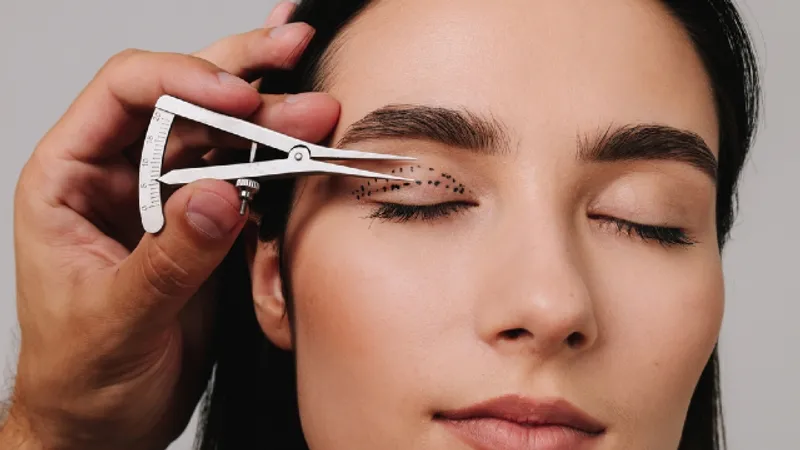
Eyelid Asymmetry: Causes and Correction Options
Medically reviewed by Dr. Kim Ju-Chan, Board-Certified Plastic Surgeon
There is a peculiar thing about asymmetry in IBON Plastic Surgery's published material: the word turns up in two entirely different roles. It is a reason patients arrive — an uneven crease, one lid sitting lower than the other — and it is also an item on the disclosed complication list of essentially every procedure the clinic performs. Reading those two occurrences as the same thing is the most common mistake patients make about this subject, and separating them is what this article is for.
Two Occurrences, Two Meanings
Take them one at a time.
Asymmetry as a complaint. The clinic's revision double eyelid service describes patients seeking it when the previous eyelid crease is uneven, too strong, unstable, or does not match the appearance they wanted. Its candidate description names people dissatisfied with a previous result who also have a condition that revision surgery can appropriately address. Here asymmetry is a finding — something present, measurable, and potentially correctable.
Asymmetry as a disclosed outcome. Look at the risk lists and it appears again, procedure after procedure: mild asymmetry after upper blepharoplasty, minor asymmetry after lower blepharoplasty, asymmetry among the risks of epicanthoplasty, of lateral canthoplasty, of the crease techniques, of the brow lifts, of thread lifting. Here it is not a finding at all. It is a possibility every operation carries.
Keep those separated and the subject becomes tractable: asymmetry is the presenting complaint in one place and a disclosed outcome on every risk list in the other. A patient who reads the second as the first concludes that asymmetry is a defect surgery removes. It is not; it is a variable surgery works within.
The practical consequence is that the two occurrences call for different questions. About the complaint you ask what is producing it and what can be changed. About the disclosure you ask how much is likely to remain and when it would be reasonable to judge.
Faces Are Not Symmetric to Begin With
This is the fact the whole subject rests on, and it is worth stating before any discussion of correction.
The clinic's approved-claims language for double eyelid surgery says the procedure may improve the appearance of eyelid symmetry — and, in the same row, that claims should stay factual and stop short of promising symmetry that is perfect. Two careful words there: appearance, and the explicit refusal to promise perfection.
That is not hedging. Operating on two lids that began as different lids produces two results that are also, to some degree, different. A surgeon can reduce a difference; nobody can abolish one.
Which means the honest question at a consultation is not "will my eyes match?" but "how much difference will remain, and will it be the kind anyone notices?"
What Produces the Asymmetry You Can See
The clinic's assessments name the variables, and they are worth knowing because they explain why the answer is never generic.
For a crease that reads unevenly, the double eyelid consultation describes evaluating eyelid anatomy, skin, the existing crease, eye function, and desired appearance. Skin thickness and fat distribution appear in the buried-suture assessment. A crease formed on two lids of different thickness sits differently on each.
For a lid sitting at a different height, ptosis correction is described for drooping caused by weakness in the eyelid-lifting muscle or its tendon, assessed by evaluating eyelid position, movement, muscle function, and how far the lid has dropped. Two lids can have measurably different muscle function — which is invisible in a photograph and decisive in a plan.
For a brow contributing from above, the forehead-lift services name brow asymmetry directly among the concerns they address, and describe the surgeon assessing brow height and symmetry as part of the evaluation.
Three different structures, three different corrections. What you see as "one eye looks different" can originate in any of them, or in more than one at once.
After a Previous Operation
Asymmetry that appears after surgery is its own category, and the clinic treats it as one.
Revision double eyelid surgery is listed as a service in its own right. Its published steps are assessing the previous crease and eyelid tissues, planning the revision, modifying the existing eyelid structure, and creating or refining the desired crease. Its suitability language names four inputs: the eyelid tissue, previous surgical history, healing status, and overall eye condition.
Two of those exist only because an operation already happened, which is why a post-surgical asymmetry is assessed differently from one you were born with. The material the surgeon is working with has been altered, and its behavior is partly a matter of how it healed.
The revision risk list is correspondingly longer than a first-time list, and asymmetry sits on it too — alongside persistent or recurrent crease problems, multiple folds, crease loss, a crease sitting too high or too low, eyelid retraction, incomplete closure, and problems with how the lid works. A second operation is a real option and it is not a guarantee of a matched result.
Treating One Side Only

Patients rarely raise this and it is worth putting on the table.
Where a difference sits mostly on one side, operating on that side alone is a real option — and it is a harder operation than it sounds, because the target is not an ideal but the other eye. The clinic's consultation descriptions have the surgeon evaluating the existing crease, eyelid anatomy, and the desired appearance before recommending a technique; on a one-sided plan, the untreated eye becomes part of the specification.
The alternative is operating on both to bring them to a common result, which is a different proposition: more tissue handled, both lids healing at once, and the outcome judged against each other rather than against a photograph.
Neither is obviously right. What settles it is the size of the difference, where it comes from, and how the two lids are built — which is another way of saying it is settled by examination rather than in advance.
Timing: Do Not Judge Early
A practical point that saves people a great deal of anxiety.
Swelling is not symmetric either. The clinic's recovery descriptions have swelling and bruising improving over one to two weeks for several procedures, with residual swelling settling over the following weeks and the final contour continuing to refine for months. For revision surgery it describes the crease continuing to settle as swelling decreases and tissues heal.
Two lids do not swell identically or subside on the same schedule. An asymmetry visible at two weeks may not be the asymmetry you have at three months, and judging the result while the tissue is still moving produces a verdict about a stage rather than about an outcome.
That is not a reason to ignore something that worries you — raise it with the surgeon, who can say whether what you are seeing is expected at that point. It is a reason not to reach conclusions on a schedule the tissue is not keeping.
What to Ask
The useful questions are quantitative rather than reassurance-seeking.
- Looking at me now, how different are my two sides, and in what respect — crease height, lid position, brow position, or lid opening?
- Which of those differences is the one that bothers me?
- What would you expect to remain after surgery?
- At what point should the result be judged?
- If a difference remains that I am unhappy with, what are the options and when could they be considered?
That last question has a real answer here, because revision is a named service with its own assessment criteria rather than an afterthought.
MedlinePlus, the U.S. National Library of Medicine's consumer health service, recommends writing your questions down beforehand, bringing a list of medicines, supplements, and allergies, and taking notes during the appointment rather than relying on memory. It also advises being straightforward rather than saying what you think a clinician wants to hear — which matters here, because "it's fine" is an easy thing to say about a difference you are actually bothered by.
A practical addition: photograph yourself in even, front-on light before surgery. Memory is unreliable about what your face looked like beforehand, and a pre-operative photograph settles later arguments with yourself.
Where This Sits in Consent
StatPearls describes informed consent as a discussion in which the patient ends up holding three things: the nature of the intervention, how its risks weigh against its benefits, and the alternatives available — with refusal open and agreement able to be withdrawn later.
Asymmetry belongs in all three parts of that conversation. It is part of the nature of the intervention, because a surgeon is working on two structures that differ. It is on the risk side, because every procedure lists it. And it bears on alternatives, because "treat one side only" is sometimes a real option.
MedlinePlus frames the patient's side as an entitlement to the information needed to decide, including risks and benefits, with the freedom to change your mind about consent at any point. Those protections describe United States law rather than Korean law, but the standard they set is a fair one to expect of any consultation.
You can describe what you are seeing in writing before you travel through the clinic's contact page, and the way it describes planning each case individually is set out on the about us page.
The Bottom Line
- Asymmetry appears in the clinic's material twice: as a complaint the revision service is built for, and as a disclosed outcome on essentially every procedure's risk list. The two readings need separating.
- The approved-claims language says a procedure may improve the appearance of eyelid symmetry and stops short of promising symmetry that is perfect.
- A visible difference can originate in the crease, in eyelid-lifting muscle function, or in brow position — three structures with three corrections.
- Post-surgical asymmetry is assessed as its own thing, with suitability resting on eyelid tissue, previous surgical history, healing status, and overall eye condition.
- Swelling subsides unevenly; judging symmetry before the result has settled measures a stage rather than an outcome.
Frequently Asked Questions
Is some eyelid asymmetry normal?
Faces are not symmetric to begin with. The clinic's approved language describes improving the appearance of eyelid symmetry and explicitly stops short of promising symmetry that is perfect.
Can surgery make my eyes match exactly?
That is not what the published language claims. A difference can be reduced; the material also lists asymmetry among the possible outcomes of the procedures themselves.
What causes one eyelid to sit lower?
It can be the crease, the eyelid-lifting muscle, or the brow above. Ptosis correction is described for drooping caused by muscle or tendon weakness, while the forehead-lift services name brow asymmetry among what they address.
My eyes look uneven after previous surgery. What now?
Revision double eyelid surgery is a service in its own right. Suitability is described as depending on the eyelid tissue, previous surgical history, healing status, and overall eye condition, settled by consultation.
When should I judge my result?
Not early. Swelling and bruising are described as improving over one to two weeks for several procedures, with residual swelling settling over following weeks and the contour refining for months.
Is asymmetry listed as a risk?
Yes — across the crease techniques, the canthoplasty services, the blepharoplasty procedures, the brow lifts, and thread lifting. It is disclosed rather than hidden.
Should I bring photographs?
Front-on photographs of yourself taken in even light before surgery are useful. Memory is unreliable about a face you see every day.
This article is for general informational purposes and does not constitute individualized medical advice, and it is not a self-diagnosis tool. Surgical candidacy, technique, and expected outcomes can only be determined through a consultation with a qualified plastic surgeon.
References & Sources
- MedlinePlus — Eyelid Disorders
- MedlinePlus — Plastic and Cosmetic Surgery
- MedlinePlus — Talking With Your Doctor
- MedlinePlus — After Surgery
- StatPearls — Informed Consent
Schedule a 1:1 Consultation with Dr. Ju-Chan Kim
Have questions about recovery time, surgical planning, or transparent pricing in Busan? Contact our international patient team today.
Book Consultation →