
Epicanthoplasty: Procedure, Candidacy and Recovery Guide
Inner corner surgery reshapes the epicanthal fold itself. Here is the published picture at IBON Plastic Surgery — who it suits, what happens, and what overcorrection means.
Epicanthoplasty (Inner Eye Corner Surgery): Procedure and Recovery Guide
Medically reviewed by Dr. Kim Ju-Chan, Board-Certified Plastic Surgeon
Of all the eye procedures on IBON Plastic Surgery's menu, this is the one whose object is smallest and most specific: a fold of skin at the inner corner of the eye. The operation reshapes it. Everything else in the published description — who it suits, what it risks, how long it takes to settle — follows from the fact that the target is a defined anatomical structure rather than a general area, and that reshaping it can be taken too far.
What the Operation Is
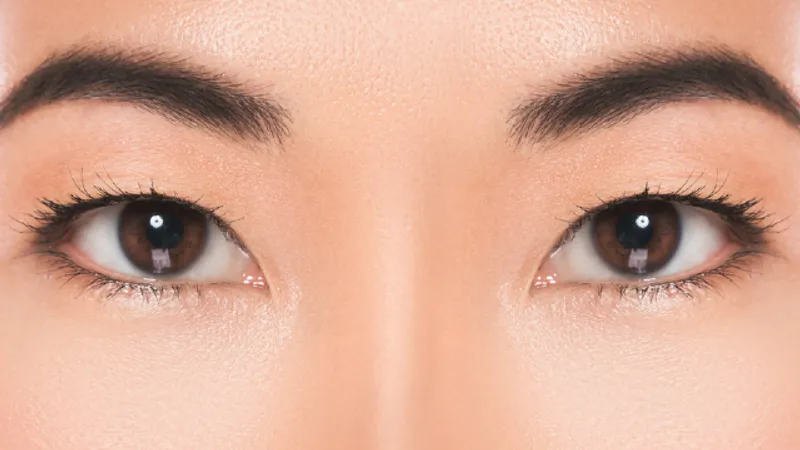
The clinic describes epicanthoplasty as an eye surgery that reshapes the inner corner of the eyes by modifying the epicanthal fold, to create a more open appearance.
The epicanthal fold is the small web of skin that covers part of the inner corner. Where it is prominent, it can make the eye read as shorter or more closed than the eye actually is — which is what patients are describing when they say their eyes look narrow at the inner end.
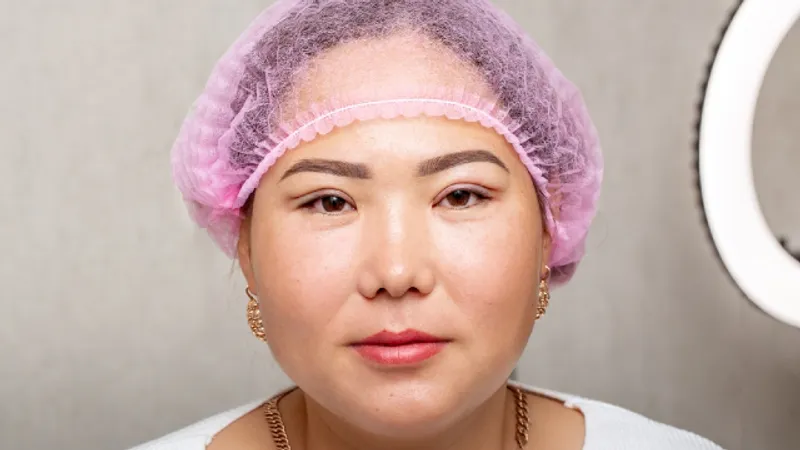
Patients are described as seeking the procedure to address a prominent inner eye fold and achieve a more open-looking eye appearance.
The Published Steps
Three movements, and the brevity is honest rather than evasive.
The surgeon plans the incision, modifies the inner corner tissue, and closes the area to create the intended contour.
That is the operation. What varies between patients is the planning — how much of the fold to reshape and in what direction — which is why the assessment below carries more weight than the step list.
What the Assessment Looks At
The surgeon is described as evaluating the inner eye anatomy, the epicanthal fold, skin condition, and the desired appearance before recommending an approach.
Four inputs, three of them physical. The fourth — desired appearance — matters more here than in some procedures because the change is measured in millimeters and the difference between "more open" and "too open" is a matter of degree.
Who Is Suitable, and Who Should Wait
Candidacy is described simply: adults with a prominent epicanthal fold who have realistic expectations and are suitable for surgery after consultation.
The presence of the fold is the qualifying finding. If there is not a prominent fold to reshape, there is nothing for this operation to do.
Unsuitability names patients with untreated eye conditions, uncontrolled medical problems, or unrealistic expectations, who may need to postpone or avoid surgery.
"Unrealistic expectations" carries weight in this particular procedure. The change available is real and it is bounded by the anatomy present.
Why "How Much" Is the Whole Consultation
Most surgical consultations settle a technique. This one settles a quantity, and that changes what a useful conversation looks like.
The operation has one method and a range of magnitudes. Reshaping a little produces a small change at the inner corner; reshaping more produces a larger one, and somewhere beyond that sits the overcorrection named on the risk list. There is no second technique to fall back on if the amount is wrong — the amount is the plan.
Two consequences follow for a patient.
First, bring a description rather than a procedure name. What bothers you about the inner corner, how much more open you want the eye to read, and — just as useful — what would be too much for you.
Second, ask the surgeon to describe the planned change in terms you can picture. Proportion relative to your own eye is more meaningful than a measurement, and a surgeon who can describe it that way has thought about your face rather than about the operation in general.
What It Does Not Address
Worth being explicit, because the inner corner is easily confused with its neighbors.
This operation works at the inner end of the eye. It does not lengthen the outer corner, it does not create or change an upper-eyelid crease, and it does not lift a lid that sits low because the muscle raising it has weakened. Those are separate procedures on the clinic's menu with their own candidacy criteria.
Patients frequently arrive describing a general impression — the eye looks small, or closed, or tired — which can originate at any of those places. The examination is what turns the impression into a location, and the location is what selects the operation.
If more than one thing is contributing, say so. That is information for the assessment rather than an inconvenience to it.
Anesthesia
Local anesthesia is described as commonly used, with mild discomfort and swelling possible after surgery.
MedlinePlus, the U.S. National Library of Medicine's consumer health service, explains what that means: a local anesthetic numbs a limited area while you remain awake throughout. If sedation is discussed it is a separate addition and comes in graded levels. Ask which applies to your plan.
Overcorrection: The Risk Specific to This Operation
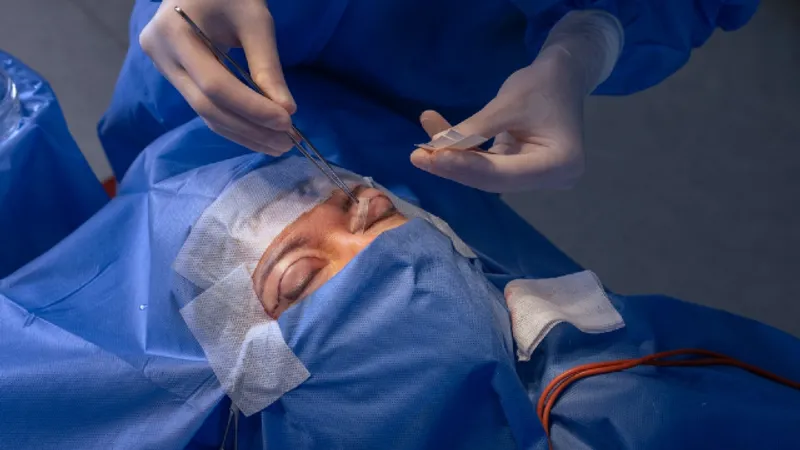
The disclosed risks are swelling, bruising, scarring, asymmetry, infection, and overcorrection.
Five of those appear across the clinic's procedures. The sixth is the one to understand before consenting.
Reshaping a fold can be taken further than the face supports. The result reads as an inner corner opened past its natural proportion — and because the operation modifies the fold itself, that is a change in the structure rather than in something sitting on top of it.
The practical consequence is that "how much" is the central question of this consultation. Ask what the plan changes, in what proportion, and what the surgeon's threshold is for stopping short.
Scarring is on the list too, which is worth pairing with the recovery note below: the inner corner heals like any other incision, and the published timeline says so.
Recovery and the Two Timelines
The clinic separates them clearly, and patients should too.
Initial swelling and bruising commonly improve over one to two weeks. Scar maturation takes longer.
Then the results row: early changes may be visible after swelling decreases, but the final appearance can take several months to settle.
So the visible recovery is a fortnight and the finished result is months out. A photograph at three weeks is a photograph of an intermediate state, and comparing it against a gallery is comparing different points in time.
Duration and visit requirements are listed as matters to confirm with the clinic rather than published, which makes them questions for the consultation if you are planning travel.
How Long It Holds
The clinic states that results may be long-lasting, while tissue changes, aging, scarring, or fold recurrence can affect longevity.
Fold recurrence is the specific item. A reshaped fold can, over time, behave more like the fold it was — which is a different phenomenon from a surgical failure and is disclosed as a possibility rather than a likelihood.
Preparation and Aftercare
Preparation asks patients to discuss medications, allergies, previous eye surgery, and medical conditions with the surgeon, and to follow instructions on medicines, smoking, skincare, and fasting where sedation or general anesthesia is planned.
Aftercare is described as following the wound-care instructions, keeping the incision area clean, and using prescribed medication as directed, while avoiding rubbing the eyes and strenuous activity until cleared, and attending the scheduled follow-up visits.
"Keeping the incision area clean" is a plainer instruction here than elsewhere because the incision is small, in a corner, and easy to neglect. MedlinePlus's account of infection control makes the general point: the ordinary precautions — hand hygiene above all — are what keep infections from spreading in any healthcare context, and they apply to a wound you are caring for yourself just as much as to a clinical setting.
Reading the Timeline If You Have Traveled
The gap between the two recovery figures matters more for an international patient than for a local one, and it is worth planning around rather than discovering.
One to two weeks covers the swelling and bruising — which is to say, it covers looking ordinary in public. Several months covers the scar maturing and the final appearance settling.
For someone who has flown in, that means the result goes home unfinished. The inner corner you photograph at the airport is not the inner corner you will have at six months, and judging the operation from it produces an unfair verdict in either direction.
Two practical moves. Photograph yourself in even, front-on light before surgery, so that later comparisons have a baseline that is not your memory. And agree with the surgeon in advance when the result should be assessed, so that the date is a decision rather than an impulse.
If something worries you before then, that is a message to the clinic rather than a reason to conclude anything — the aftercare instruction already asks you to attend the scheduled follow-ups and to raise concerns as they arise.
Questions Worth Asking
- Is my epicanthal fold prominent enough that this operation has something to reshape?
- How much change are you planning, and what does that look like in proportion to my eye?
- What is your threshold for stopping short of overcorrection?
- What will the scar look like at three months, and at a year?
- When should I judge the final appearance?
MedlinePlus recommends preparing questions before the appointment, bringing a list of medicines, supplements, and allergies, and taking notes during it. StatPearls describes consent as a discussion of the intervention, its balance of risk and benefit, and the alternatives — here, the outer corner, both corners, another eyelid procedure, or nothing.
Written questions reach the practice at its contact page, and photographs it has chosen to publish sit on the before-and-after page; read them as selected cases rather than as an average.
One Practical Note on the Scar
The incision sits at the inner corner, which is an area that creases with every blink and sits where people look first.
The clinic names scarring on the risk list and describes scar maturation as taking longer than the swelling. Those two facts together are the reason to ask a specific question rather than a general one: not "will it scar?" but "where exactly will the line sit, and what does it look like at three months and at a year?"
A surgeon who can answer that has planned the incision rather than simply made one.
The Bottom Line
- The operation reshapes the inner corner by modifying the epicanthal fold, aiming at a more open appearance.
- The published steps are planning the incision, modifying the inner corner tissue, and closing the area to create the intended contour.
- Candidacy rests on having a prominent epicanthal fold, with realistic expectations and suitability confirmed at consultation.
- Overcorrection is the risk specific to this procedure, alongside swelling, bruising, scarring, asymmetry, and infection.
- Swelling and bruising commonly improve over one to two weeks, while scar maturation and the final appearance take several months.
Frequently Asked Questions
What does epicanthoplasty do?
It reshapes the inner corner of the eye by modifying the epicanthal fold, with the aim of a more open appearance.
Who is a candidate?
Adults with a prominent epicanthal fold who have realistic expectations and are found suitable after consultation.
What is assessed beforehand?
Inner eye anatomy, the epicanthal fold itself, skin condition, and the desired appearance.
What is overcorrection?
Reshaping taken further than the face supports, leaving the inner corner opened past its natural proportion. It is named on the procedure's disclosed risk list.
How long is the recovery?
Initial swelling and bruising commonly improve over one to two weeks, while scar maturation takes longer and the final appearance can take several months to settle.
Will there be a scar?
Scarring is on the disclosed list, and scar maturation is described as taking longer than the swelling. Ask what the line looks like at three months and at a year.
Do the results last?
Results may be long-lasting, while tissue changes, aging, scarring, or fold recurrence can affect longevity.
This article is for general informational purposes and does not constitute individualized medical advice, and it is not a self-diagnosis tool. Surgical candidacy, technique, and expected outcomes can only be determined through a consultation with a qualified plastic surgeon.
References & Sources
- MedlinePlus — Eyelid Disorders
- MedlinePlus — Anesthesia
- MedlinePlus — Infection Control
- MedlinePlus — After Surgery
- StatPearls — Informed Consent
Schedule a 1:1 Consultation with Dr. Ju-Chan Kim
Have questions about recovery time, surgical planning, or transparent pricing in Busan? Contact our international patient team today.
Book Consultation →