
Endoscopic Forehead Lift: What to Expect
Learn what to expect from an Endoscopic Forehead Lift, including benefits, procedure steps, recovery, and results. Discover if it may be right for you.

Endoscopic Forehead Lift: What to Expect at IBON Plastic Surgery

A sagging or heavy brow can make the entire upper face look tired, aged, or displeased even when a person feels perfectly rested. For patients exploring options to address this, the endoscopic forehead lift has become one of the more commonly discussed surgical solutions, offering brow repositioning through small, minimally invasive incisions. At IBON Plastic Surgery in Busanjin-gu, Busan, this procedure is performed by founder and medical director Dr. Ju-Chan Kim, a board-certified plastic surgeon whose practice is built around a single-director model of eye and upper-face surgery.
Understanding Forehead and Brow Sagging
Over time, the skin, muscle, and soft tissue of the forehead gradually lose elasticity and volume. This process, combined with the effects of gravity and years of repeated muscle movement, can cause the eyebrows to descend, the forehead skin to develop horizontal creases, and vertical lines to form between the brows. The space between the brow and the eyelid crease can also shorten as the brow settles lower on the bony orbit.
In many patients, brow descent contributes to a heavier, more crowded appearance of the upper eyelid — sometimes described as "hooding" — which is one reason forehead and brow procedures are frequently discussed alongside eyelid surgery rather than in isolation. A brow that has dropped can visually mimic upper eyelid excess skin, and distinguishing between the two is an important part of an accurate surgical assessment. Correcting only the eyelid in a patient whose primary issue is brow position may address the appearance temporarily but leave the underlying cause unaddressed, which is why a careful diagnostic evaluation typically precedes any decision about treatment.
Environmental and lifestyle factors — sun exposure, smoking, significant weight fluctuation, and simple genetic variation in skin thickness and elasticity — all influence how quickly and how visibly this aging pattern develops. Some patients notice brow descent as early as their thirties, while others do not consider treatment until later in life.
What Is an Endoscopic Forehead Lift?
An endoscopic forehead lift is a surgical technique used to reposition the brow and smooth the forehead through several small incisions hidden within the hairline, rather than a single long incision running from ear to ear across the scalp. A thin endoscope — a camera-equipped surgical instrument — is inserted through these incisions, allowing the surgeon to view the underlying tissue layers on a monitor and work with precision beneath the skin, without needing to fully expose the area through a large open wound.
Through this approach, the surgeon can release and reposition the tissues responsible for brow descent, address overactive or overly tight forehead and glabellar muscles that contribute to deep creasing between the brows, and elevate the brow to a more balanced, natural position — all while minimizing scarring and disruption to surrounding nerves and blood vessels. Because the incisions are small and concealed within the hair, visible scarring is generally limited compared with traditional open forehead lift techniques, and sensory changes to the scalp, when they occur, tend to be less pronounced and more likely to resolve than with older open methods.
Compared to a coronal (open) forehead lift, which involves a single long incision across the top of the scalp, the endoscopic method generally involves less tissue trauma and a shorter incision length overall, since the openings are small ports rather than one continuous cut. This distinction is often a key point of interest for patients researching their options, since it affects both recovery and the visibility of scarring afterward.
Who Is a Suitable Candidate?

Not every patient with forehead concerns is a good candidate for this specific technique, which is why consultation and clinical judgment play a central role at IBON. Patients typically considered suitable include those with:
- Mild to moderate brow descent or forehead skin laxity
- Sufficient hair coverage to conceal the endoscopic incisions
- Good general health with no conditions that would complicate surgery or healing
- Forehead skin with enough remaining elasticity to redrape smoothly once the brow is repositioned
- Realistic expectations about the degree of change surgery can achieve
Patients with more advanced skin laxity, a very high or receding hairline, or combined concerns involving significant upper eyelid skin excess may be advised toward a modified surgical plan — potentially combining brow repositioning with eyelid surgery — or toward a different procedure altogether if the endoscopic technique would not adequately address their anatomy. Patients who are still in the early stages of brow descent may also be counseled that non-surgical options could be sufficient for their current concerns.
At IBON, this determination is made directly by Dr. Kim during consultation — the same surgeon who will go on to perform the procedure, review the case, and manage aftercare. This continuity is central to the clinic's stated philosophy of individually tailored treatment planning and avoiding unnecessary intervention.
The Procedure Process
An endoscopic forehead lift generally follows a structured sequence, beginning well before the patient enters the operating room.
Consultation and Planning
The process begins with an in-depth evaluation of the forehead, brow position, skin quality, muscle activity, and hairline, along with a discussion of the patient's goals and medical history. This is also when Dr. Kim determines whether the endoscopic approach is appropriate or whether an alternative plan — such as a different lifting technique or a combined procedure — would serve the patient better. Photographic assessment and physical examination of brow mobility are typically part of this stage.
Anesthesia
Depending on the scope of the procedure and the patient's individual case, forehead lift surgery may be performed under local anesthesia with sedation or general anesthesia. The anesthesia plan is discussed and confirmed during pre-operative consultation.
Surgical Technique
During the procedure itself, several small incisions — typically a few centimeters each — are made within the hairline. The endoscope is introduced through these incisions, allowing the surgeon to visualize and access the tissue layers beneath the skin without a large open incision. The relevant tissues, including the muscles that contribute to forehead creasing and glabellar lines, are released and repositioned as needed, and the brow is secured in its new position using fixation methods appropriate to the individual case — which may include temporary sutures, absorbable fixation devices, or other techniques depending on surgical judgment.
Closure and Immediate Aftercare
Once repositioning is complete, the small incisions are closed, and the patient is monitored during the initial recovery period before follow-up care begins. A light dressing or compression wrap may be applied to support the healing tissue in the early days after surgery.
Doctor's Expertise
Dr. Ju-Chan Kim completed his plastic surgery training at Dong-A University Hospital, one of Busan's principal teaching hospitals, and is a board-certified plastic surgery specialist. Prior to founding IBON Plastic Surgery, he held director positions at several plastic surgery clinics in the region. He remains active in Korea's academic surgical community as a member of professional bodies including the Korean Society of Plastic and Reconstructive Surgeons and the Korean Society for Aesthetic Plastic Surgery, and has contributed research to academic journals over the course of his career.
This academic and clinical background informs how forehead and brow procedures are approached at IBON: as a technically demanding area of surgery where precise reading of skin quality, muscle behavior, and brow position — not a standardized template — determines the surgical plan.
Why Patients Choose IBON Plastic Surgery
IBON operates on a single-director system: every consultation, every surgery, and every follow-up visit is handled personally by Dr. Kim. There is no substitute-surgeon arrangement, meaning the physician a patient meets during consultation is the same physician performing the operation and reviewing recovery afterward. This structure is intended to give patients continuity and accountability throughout the entire treatment timeline, rather than a fragmented experience across multiple providers.
The clinic's stated approach also includes conservative treatment recommendations — avoiding unnecessary procedures when a more modest intervention, or no intervention at all, would be sufficient — genuine, appropriately sourced materials, and a structured aftercare process, supported by IBON's surgical responsibility guarantee for continued post-operative care. IBON is registered as a medical institution authorized to treat international patients under Korea's Medical Service Act, reflecting its standing to receive patients traveling from outside Korea for treatment.
Recovery, Safety, and Realistic Outcomes
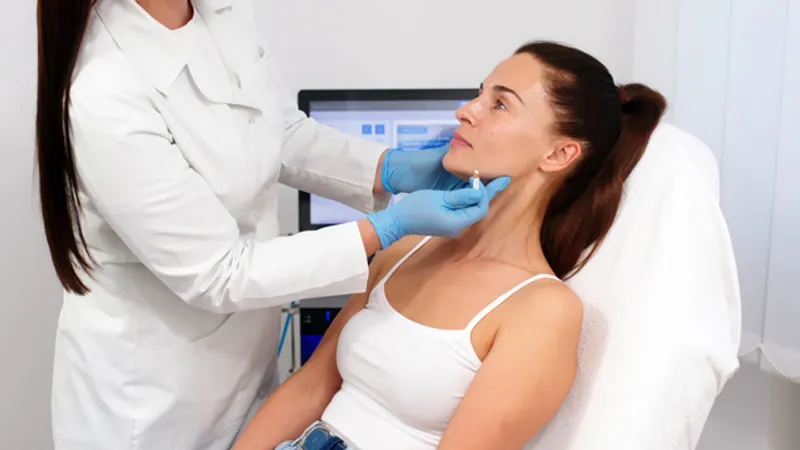
Recovery after an endoscopic forehead lift generally involves some swelling and bruising around the forehead and upper eye area in the initial days following surgery, gradually subsiding over the following weeks. Some patients also notice temporary tightness, numbness, or itching along the scalp as sensation returns to the treated area; these sensations are typically transient. Because the incisions are small and located within the hairline, visible scarring is typically minimal, and most patients are able to conceal the incision sites within their existing hair as they heal.
As with any surgical procedure, individual healing timelines vary depending on the patient's tissue characteristics, overall health, and adherence to post-operative care instructions — including guidance on activity restriction, hair washing, and follow-up visit scheduling. Patients are advised to follow their surgeon's specific instructions closely and to attend scheduled follow-up appointments so that healing can be monitored appropriately.
It is important for prospective patients to approach this procedure with realistic expectations. An endoscopic forehead lift can meaningfully improve brow position, reduce forehead creasing, and soften the appearance of glabellar lines, but it does not stop the natural aging process, and further changes may occur over time as with any aging face. Results and their expected durability should be discussed candidly during consultation rather than assumed in advance, and no outcome can be guaranteed before an individualized assessment.
Planning a Consultation
Patients — including those traveling from outside Korea — considering an endoscopic forehead lift are encouraged to contact IBON Plastic Surgery in advance to arrange consultation timing, discuss language support, and plan the follow-up visits that post-operative recovery requires. Because brow and forehead procedures involve a defined healing period, coordinating travel dates around post-operative check-ups is a practical part of preparing for surgery abroad. A personalized consultation with Dr. Kim remains the most reliable way to determine whether this procedure is the right fit for an individual's anatomy, concerns, and goals.
Schedule a 1:1 Consultation with Dr. Ju-Chan Kim
Have questions about recovery time, surgical planning, or transparent pricing in Busan? Contact our international patient team today.
Book Consultation →