
Endoscopic Brow Lift: A Procedure Guide for the Forehead
Three ways the operation can be performed, camera-guided release and fixation, and a recovery in three stages. The published picture at IBON Plastic Surgery.
Endoscopic Brow Lift: Procedure Guide for Forehead Rejuvenation
Medically reviewed by Dr. Kim Ju-Chan, Board-Certified Plastic Surgeon
Most procedures on IBON Plastic Surgery's menu are described as one operation. The brow lift is described as three: it can be performed using endoscopic, temporal, or traditional surgical technique, depending on the patient's anatomy and goals. That single sentence is the most important thing in the published material, because it means the name of the procedure does not tell you what will happen — the assessment does. This guide sets out what the clinic publishes and what the three-way choice means for a patient.
What the Operation Does
The clinic describes a brow lift as a cosmetic procedure that elevates and reshapes the eyebrows and may reduce forehead wrinkles or heaviness caused by brow descent.
Two effects, one cause. The brow moves, and what sits on the forehead above it responds — which is why forehead lines appear in a description of an operation on the eyebrows.
Who Is a Candidate
Adults with brow descent, forehead skin laxity, upper-face heaviness, or bothersome forehead lines, who have realistic expectations and are medically suitable for surgery.
Four findings, and they frequently arrive together. A descended brow produces heaviness; heaviness produces the impression of tiredness; lax forehead skin produces lines. One assessment covers all of them.
Who Should Postpone
The clinic names patients with uncontrolled medical conditions, active infection around the treatment area, significant untreated eye problems, or unrealistic expectations as needing to postpone or reconsider after medical assessment.
"Significant untreated eye problems" is worth noticing on an operation performed above the eye. The brow and the lid are mechanically connected, and an eye that has something going on is an eye whose treatment comes first.
What the Assessment Covers
This is one of the broadest assessment lists on the clinic's menu.
The surgeon evaluates brow position and symmetry, forehead and eyelid skin, facial proportions, muscle activity, hairline, and overall medical history, with surgical options discussed according to anatomy and desired outcome.
Six inputs. Hairline is the one that does not appear anywhere else, and it is there because one of the three techniques places its incisions inside it. Your hairline is therefore not a cosmetic detail but a factor in which operation is available to you.
Eyelid skin appears too, which is the assessment acknowledging that brow and lid are one problem seen at two heights.
The Published Steps
Seven movements, and the middle three describe the endoscopic version specifically.
- Brow position and forehead assessment.
- Local anesthesia with sedation as needed.
- Small endoscopic incisions within the hairline.
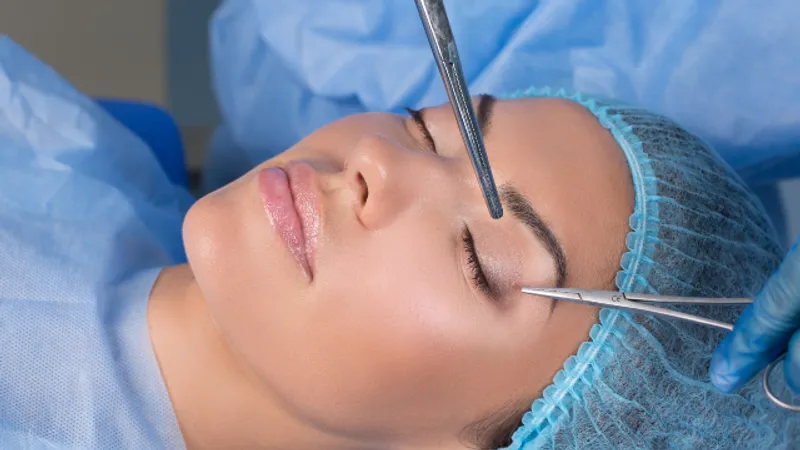
- Camera-guided release and repositioning of forehead and brow tissue.
- Fixation — for example with absorbable devices or sutures.
- Closure.
- Same-day discharge.
Steps four and five are the operation. Release frees tissue that has settled downward; repositioning moves it; fixation holds it there while it heals. A brow lift is not a matter of pulling skin tight — it is a matter of releasing, moving, and securing.
The camera in step four is what allows steps three and five to happen through small openings rather than a long one.
Why Three Techniques Exist
The clinic does not explain the choice, but the assessment list shows what it turns on, and the logic is worth following.
A technique that works inside the hairline needs a hairline to work inside, and needs the distance between hairline and brow to be workable. That is why hairline appears in the assessment at all.
A technique that approaches from the temple reaches part of the brow rather than the whole forehead. A traditional approach uses a longer opening and therefore different access.
Which is available to you is a matter of how your forehead is built — its height, its hairline, where the descent actually is — and what you are trying to change. Someone whose finding is the outer brow is a different problem from someone whose finding is the whole forehead.
The practical consequence is the question in the list below: which technique, and what decided it. It is not a challenge; it is the question that turns a procedure name into a plan.
Brow, Forehead, or Lid
One clause in the assessment list repays attention: eyelid skin appears alongside brow position and forehead skin.
That is the clinic checking whether the heaviness you have described comes from above or from the lid itself. Both produce a tired-looking upper face, and they are addressed by different operations.
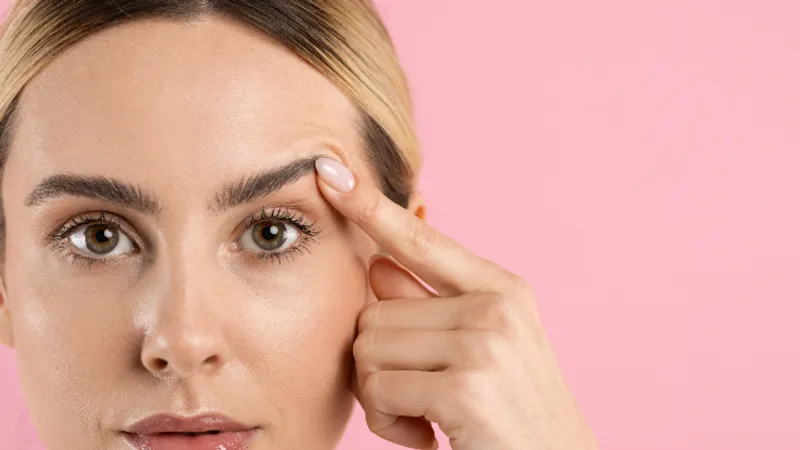
There is a simple thing you can do before the consultation. In a mirror, lift your brows gently with your fingertips and see whether the heaviness resolves. If it largely does, the brow is contributing. If the lid still feels heavy with the brow raised, something at lid level is involved too.
That is not a diagnosis and it should not be presented as one. It is an observation worth reporting, and it is exactly the kind of description that helps an examination start from something concrete.
Anesthesia
Local anesthesia with sedation, or general anesthesia, may be used depending on the surgical technique and the patient's needs, with discomfort afterward generally managed by prescribed or recommended medication.
This is one of the few procedures on the menu where general anesthesia appears as a possibility. MedlinePlus, the U.S. National Library of Medicine's consumer health service, distinguishes the categories: a local anesthetic numbs a limited area and leaves you awake; sedation reduces awareness in graded levels; general anesthesia is different again.
Ask which applies to your plan, and ask who administers and monitors it. The answer changes what the day involves considerably more than the choice of surgical technique does.
What Can Go Wrong
The disclosed effects are swelling, bruising, temporary numbness or tightness, asymmetry, scarring, hair loss near incisions, changes in forehead sensation, infection, bleeding, nerve injury, and recurrence of brow descent.
Three of those belong to this operation in particular.
Hair loss near incisions follows from placing incisions within the hairline.
Changes in forehead sensation and nerve injury follow from an operation that travels under the skin of the forehead — the nerves supplying sensation there run through the territory being released.
Recurrence of brow descent is honest inclusion rather than fine print. A brow that has been repositioned sits on a face that continues to age.
Recovery
Swelling and bruising are described as most noticeable during the first several days, improving gradually thereafter. Many patients resume light activities within approximately one to two weeks, while complete healing and settling of the brow may take several weeks to months.
Early changes are visible after swelling decreases, with the final brow position continuing to settle over several weeks or months.
Three stages, then: days for the sharpest swelling, one to two weeks to light activity, weeks to months for the brow to arrive where it will stay.
No operating time is published, and the clinic explains why: surgical time varies by technique and by whether other procedures are performed at the same time. Usually one surgical visit is required, followed by postoperative appointments.

How Long It Holds
Results are described as long-lasting but as not stopping natural aging and gradual tissue relaxation.
Paired with recurrence of brow descent on the risk list, that is a consistent position rather than a hedge: the operation resets a position, and the process that moved it continues.
Sensation, and Why It Is Worth Discussing Early
Two items on the risk list concern feeling rather than appearance: temporary numbness, and changes in forehead sensation, with nerve injury listed separately.
They are worth raising in the consultation for a practical reason. Numbness across part of the forehead or scalp is an ordinary experience after this operation and it can persist for a while — but a patient who has not been told to expect it will interpret it as something having gone wrong.
Ask three things. How much of the forehead is likely to be affected. How long that usually lasts. And what would distinguish an ordinary post-surgical change from something that should be reported.
The same applies to hair near the incisions. Hair loss around an incision line appears on the disclosed list, and knowing in advance that it is a recognized possibility is better than encountering it unprepared.
None of this argues against the operation. It argues for having the conversation while you are still deciding rather than afterward.
Planning the Trip Without an Operating Time
No duration is published for this operation, and the clinic gives the reason: surgical time varies with technique and with whether other procedures are performed at the same time.
For someone booking flights that is not an omission to work around — it is a consultation question with a real answer once the technique is settled.
What the material does give you is the shape. One surgical visit, same-day discharge, postoperative appointments afterward. Swelling most noticeable in the first several days. Light activities at roughly one to two weeks. Complete healing and settling of the brow over several weeks to months.
So the trip is sized by the follow-up appointments rather than by the operation, and the appointments are scheduled once the plan exists. Consultation, then schedule, then flights — and if a return has to be booked early, make it changeable.
Questions Worth Asking
- Which of the three techniques are you recommending, and what decided it?
- Where will the incisions sit relative to my hairline?
- What are the chances of numbness or altered sensation, and how long does that usually last?
- Is my finding mostly brow, mostly forehead, or partly eyelid?
- How many follow-up appointments should I plan for?
That first question is the one this article exists to prompt. Three techniques share one procedure name, and knowing which one is planned is the difference between understanding your operation and recognizing its title.
StatPearls describes consent as a discussion of what the intervention involves, how its risks weigh against its benefits, and what alternatives exist — here, the brow-edge routes, an eyelid procedure instead, or nothing. MedlinePlus recommends preparing questions beforehand and taking notes during the appointment.
Written questions can go ahead of time to the practice's contact page; patient accounts it has published are collected on the customer reviews page.
The Bottom Line
- The operation can be performed using endoscopic, temporal, or traditional surgical technique, chosen by anatomy and goals — the procedure name does not fix the method.
- The endoscopic steps are small incisions within the hairline, camera-guided release and repositioning of forehead and brow tissue, fixation, closure, and same-day discharge.
- The assessment covers brow position and symmetry, forehead and eyelid skin, facial proportions, muscle activity, hairline, and medical history.
- Hair loss near incisions, changes in forehead sensation, and nerve injury are the risks specific to this route; recurrence of brow descent is also named.
- No operating time is published because it varies with technique and with whatever else is done at the same time.
Frequently Asked Questions
Is there only one kind of brow lift?
No. The clinic describes endoscopic, temporal, and traditional surgical techniques, selected according to the patient's anatomy and goals.
What happens in the endoscopic version?
Small incisions within the hairline, camera-guided release and repositioning of forehead and brow tissue, fixation with absorbable devices or sutures, closure, and same-day discharge.
Who is a candidate?
Adults with brow descent, forehead skin laxity, upper-face heaviness, or bothersome forehead lines, with realistic expectations and medical suitability for surgery.
Why does the clinic assess my hairline?
Because one of the techniques places its incisions within it. Hairline is listed alongside brow position, forehead and eyelid skin, facial proportions, muscle activity, and medical history.
What are the risks?
Swelling, bruising, temporary numbness or tightness, asymmetry, scarring, hair loss near incisions, changes in forehead sensation, infection, bleeding, nerve injury, and recurrence of brow descent.
How long is the recovery?
Swelling and bruising are most noticeable in the first several days; many patients resume light activities within approximately one to two weeks, with complete healing and settling taking several weeks to months.
Will it stop my brows dropping again?
No. Results are described as long-lasting but not as halting natural aging and gradual tissue relaxation, and recurrence of brow descent appears on the risk list.
This article is for general informational purposes and does not constitute individualized medical advice, and it is not a self-diagnosis tool. Surgical candidacy, technique, and expected outcomes can only be determined through a consultation with a qualified plastic surgeon.
References & Sources
- MedlinePlus — Plastic and Cosmetic Surgery
- MedlinePlus — Anesthesia
- MedlinePlus — After Surgery
- MedlinePlus — Talking With Your Doctor
- StatPearls — Informed Consent
Schedule a 1:1 Consultation with Dr. Ju-Chan Kim
Have questions about recovery time, surgical planning, or transparent pricing in Busan? Contact our international patient team today.
Book Consultation →