
Brow Lift vs Subbrow vs Suprabrow: Where the Incision Goes
Three forehead-lift routes at IBON Plastic Surgery, three incision locations, three amounts of brow moved. Here is how the choice is actually made.

Brow Lift vs Subbrow Lift vs Suprabrow Lift: Choosing the Right Forehead Lift
Medically reviewed by Dr. Kim Ju-Chan, Board-Certified Plastic Surgeon
Three procedures, three names that sound like degrees of the same thing, and one question that actually separates them: where does the incision go? At IBON Plastic Surgery the brow lift, the subbrow lift, and the suprabrow lift are listed as three services under endoscopic forehead lift, and their published descriptions differ mainly in the location of the cut — which in turn decides how much of the brow moves and what else moves with it. This article puts the three side by side so that the recommendation you receive makes sense rather than simply arriving.
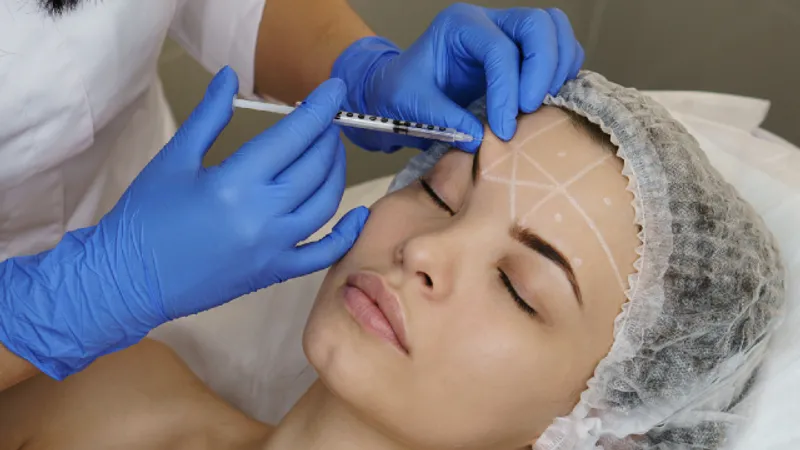
The Three Incisions
Start with the geography, because it explains everything downstream.
Brow lift. The clinic describes small endoscopic incisions placed within the hairline, followed by camera-guided release and repositioning of forehead and brow tissue, fixation with absorbable devices or sutures, closure, and same-day discharge. The incision is furthest from the eye and hidden in hair.
Subbrow lift. Here the incision sits along the lower edge of the eyebrow — described as placed near or within that lower margin. The targeted brow tissues are released and elevated, fixed in the planned position, and the incision closed carefully.
Suprabrow lift. The incision is placed near or within the brow area above, and the clinic describes the procedure as elevating the outer or lateral portion of the eyebrow. The steps are the same shape: assessment and marking, anesthesia, incision, release and elevation, fixation, closure, and postoperative monitoring.
Three different distances from the eye, then. Inside the hairline; at the bottom edge of the brow; just above it. That single variable organizes the rest of the comparison.
What Each One Is Built to Move
The incision location is not an aesthetic preference. It determines what the surgeon can reach.
The brow lift is described in the widest terms: it elevates and reshapes the eyebrows and may reduce forehead wrinkles or heaviness caused by brow descent, and can be performed endoscopically, through a temporal approach, or with traditional surgical technique, depending on anatomy and goals. Its candidate description covers brow descent, forehead skin laxity, upper-face heaviness, and bothersome forehead lines. This is the route that treats the forehead as well as the brow.
The subbrow lift is narrower and more local. It elevates the brow from an incision at the lower brow edge and is described as helping brow position while reducing the appearance of upper-eyelid skin heaviness, with the patient's natural features maintained. Its candidates are described as having brow descent, localized upper-eyelid heaviness, excess skin near the outer or central brow, or brow asymmetry. The word doing the work there is localized.
The suprabrow lift is narrower still in a different direction — not by depth but by region. It is described as elevating the outer or lateral portion of the brow, and may improve the appearance of upper-eyelid or outer-eye heaviness. Its candidates are described as having a low or drooping lateral brow, mild-to-moderate brow asymmetry, or upper-eye heaviness partly related to brow position.
So the three are not small, medium, and large. They are: the forehead and brow together; the brow with the upper lid in mind; and the outer third of the brow specifically.
The Screening Difference Worth Knowing
Most of the exclusion language is shared — uncontrolled medical conditions, active infection around the treatment area, and unrealistic expectations appear across all three, with individual assessment required in every case. Two additions stand out.
The subbrow route names significant untreated dry-eye problems among the reasons treatment may be postponed or an alternative considered. That is the route working closest to the eyelid, and the caution follows the anatomy.
The suprabrow route names something different: insufficient brow or forehead tissue for the planned technique. That is a supply constraint. A lift needs something to lift with, and where the tissue is not there the technique is not available regardless of how much the patient wants it.
MedlinePlus, the U.S. National Library of Medicine's consumer health service, is worth reading alongside the dry-eye clause. Tears are spread across the eye's surface with every blink, keeping it clean and moist, and that is a matter of sight rather than only comfort. Procedures around the brow and lid work near the structures involved, so an existing history of dryness, grittiness, or regular drop use is something to mention in the consultation without waiting to be asked.
The Risk Lists and What They Tell You
All three share the ordinary early effects — swelling, bruising, temporary numbness or tightness, discomfort, asymmetry — and each adds items that describe where it has been working.
Brow lift. Scarring, hair loss near incisions, changes in forehead sensation, infection, bleeding, nerve injury, and recurrence of brow descent. The forehead-sensation and nerve items are the signature of the route that travels furthest under the skin.
Subbrow lift. Visible or widened scarring, hair loss near the incision, infection, bleeding, sensory changes, and recurrence of brow descent, with eye-related complications described as uncommon but worth discussing at consultation. Visible scarring gets its own adjective here for an obvious reason: the incision is at the edge of the brow, not hidden in hair.
Suprabrow lift. Scarring, changes in brow position, hair loss near the incision, infection, bleeding, nerve-related symptoms, or an unsatisfactory aesthetic result, with the clinic noting that revision surgery may occasionally be required.
Recurrence of brow descent appears for two of the three, and it is an honest inclusion. A brow that has been repositioned still lives on a face that keeps aging.
Scars: The Trade Nobody States Out Loud
Put the incision locations and the scar language together and a trade appears that patients rarely hear framed directly.
The route with the incision inside the hairline hides its scar in hair, but travels the furthest and carries the sensation and nerve-related items. The routes at the brow edge stay local, but their incisions sit on visible skin — which is why the subbrow list names visible or widened scarring specifically, and why scar maturation shows up in all three recovery descriptions as the slow part.
Neither end of that trade is wrong. But a patient who chooses by scar alone has optimized one variable, and a patient who chooses by how much of the brow needs moving has answered the question the assessment is actually asking.
Recovery: Similar Shape, Different Precision
None of the three is described with a hard timeline, and the differences in wording are worth reading carefully.
After a brow lift, swelling and bruising are described as most noticeable in the first several days and then improving gradually, with many patients resuming light activities within roughly one to two weeks, while complete healing and settling of the brow can take several weeks to months.
After a subbrow lift, swelling and bruising are most noticeable early and improve gradually, with many patients resuming routine activities within several days to a couple of weeks, depending on the extent of surgery and individual healing. Strenuous activity waits until the surgeon clears it.
After a suprabrow lift, bruising and swelling are most noticeable during the first several days and improve over the following weeks, with a progressive return to normal activities as healing allows and final scar maturation and soft-tissue settling taking several months.
The pattern across all three: days to see it improve, weeks to look normal, months for the scar to finish. Plan the trip around the middle number and the photographs around the last one.
On longevity, the three are described consistently: results are long-lasting but do not halt aging, the brow position continues to settle for weeks or months, and skin elasticity, lifestyle, and individual anatomy affect how long the result holds.
Operating Time and Visits
None of the three carries a published duration, and the reason is stated: surgical time varies by technique and by whether other procedures are performed at the same time. All three are described as outpatient surgery with follow-up appointments for wound assessment and monitoring, and the suprabrow description adds that the number of follow-up visits varies with technique, extent of correction, anesthesia, and individual recovery.
If you are traveling, that is the number to pin down in writing before booking a return flight — not the operating time, but how many times you are expected back.
Anesthesia
For the brow lift the clinic describes local anesthesia with sedation, or general anesthesia, depending on technique and patient needs. For the subbrow lift, local anesthesia is common, with sedation or another form considered according to the plan. For the suprabrow lift, local anesthesia may be used, with sedation or another form selected according to the surgical plan and the patient.
MedlinePlus explains the vocabulary. A local anesthetic numbs a limited area and leaves you awake; sedation reduces awareness in degrees rather than switching it off; general anesthesia is a different thing again. Of the three routes here, only the first is described as possibly reaching general anesthesia, and that is a meaningful difference in what the day involves.
What to Ask
- Which part of my brow is descending — all of it, the outer third, or is the heaviness actually in the lid?
- Given that, which route are you recommending and what does it leave untreated?
- Where exactly will the incision sit, and what will the scar look like at three months and at a year?
- How many follow-up visits should I plan for?
- What is the anesthesia plan, and who administers it?
MedlinePlus recommends preparing questions in advance, listing your medicines, supplements, and allergies, and taking notes during the appointment. StatPearls treats informed consent as a discussion covering the nature of the procedure, its balance of risk and benefit, and the alternatives — here, one of the other two routes, an eyelid procedure instead, or no surgery.
Written enquiries go to the practice's contact page, and the results it has chosen to publish are on the before-and-after page — a selected sample rather than a cross-section of everyone treated.
The Bottom Line
- The three routes are separated by incision location: inside the hairline, along the lower edge of the brow, or near and above the brow.
- Scope follows that location — the hairline route addresses forehead and brow together, the lower-edge route is described as local and mindful of upper-eyelid heaviness, and the upper route targets the outer or lateral brow.
- The subbrow route names untreated dry-eye problems among its cautions; the suprabrow route names insufficient brow or forehead tissue for the planned technique.
- Visible or widened scarring is named specifically for the lower-edge route, while forehead sensation changes and nerve injury appear on the hairline route's list.
- No route carries a published operating time, because it varies with technique and with what else is being done at the same time.
Frequently Asked Questions
What is the difference between these three procedures?
Where the incision is placed, and therefore how much is moved. The brow lift uses small incisions within the hairline; the subbrow lift uses an incision along the lower edge of the eyebrow; the suprabrow lift uses one near or within the brow area above and elevates the outer brow.
Which one treats forehead lines?
The brow lift is the route described as possibly reducing forehead wrinkles or heaviness caused by brow descent, and its candidates include people with forehead skin laxity and bothersome forehead lines.
Which one helps a heavy upper eyelid?
The subbrow lift is described as reducing the appearance of upper-eyelid heaviness related to brow descent, and the suprabrow lift as improving upper-eyelid or outer-eye heaviness partly related to brow position.
Will the scar show?
The hairline incisions are placed in hair. The subbrow risk list names visible or widened scarring specifically, since that incision sits at the brow edge. All three describe scar maturation as taking months.
How long is the recovery?
Broadly similar across the three: swelling and bruising are most noticeable in the first several days, routine activities resume somewhere between several days and two weeks depending on extent, and complete settling and scar maturation take weeks to months.
How long does the operation take?
No duration is published for any of the three. The clinic states that surgical time varies with the technique and with whether other procedures are performed at the same time.
Do the results last?
They are described as long-lasting while not stopping natural aging. Brow descent recurrence appears on the risk lists, and longevity is tied to skin elasticity, lifestyle, and individual anatomy.
This article is for general informational purposes and does not constitute individualized medical advice, and it is not a self-diagnosis tool. Surgical candidacy, technique, and expected outcomes can only be determined through a consultation with a qualified plastic surgeon.
References & Sources
- MedlinePlus — Plastic and Cosmetic Surgery
- MedlinePlus — Tears
- MedlinePlus — Anesthesia
- MedlinePlus — Talking With Your Doctor
- StatPearls — Informed Consent
Schedule a 1:1 Consultation with Dr. Ju-Chan Kim
Have questions about recovery time, surgical planning, or transparent pricing in Busan? Contact our international patient team today.
Book Consultation →