
Upper Blepharoplasty vs Ptosis Correction: Which One Do You Need
A heavy upper lid can come from skin above it or from the muscle that lifts it. The two causes get different operations at IBON Plastic Surgery.
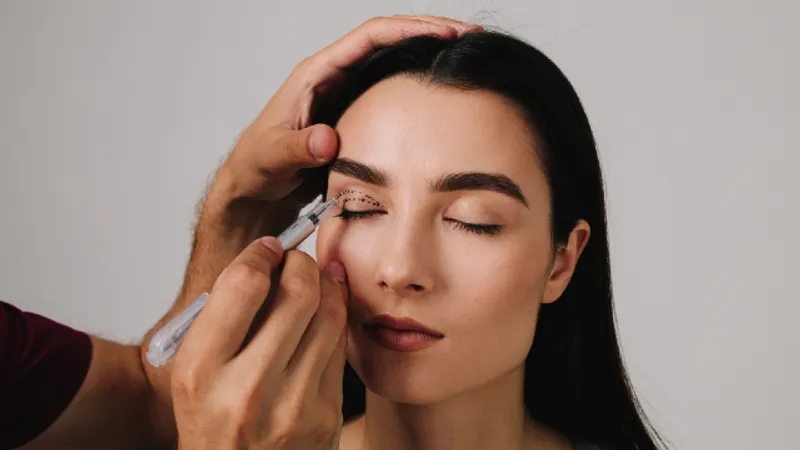
Upper Blepharoplasty vs Ptosis Correction: How to Tell Which One You Need
Medically reviewed by Dr. Kim Ju-Chan, Board-Certified Plastic Surgeon
Two patients describe the same thing in the mirror: the upper lid sits low, the eye looks tired, and the makeup that used to work no longer does. One of them needs skin removed. The other needs the muscle that raises the lid adjusted. At IBON Plastic Surgery these are separate services with separate candidacy language, and the difference between them is not severity — it is cause. This article sets out what separates them, using the clinic's published material, so that you arrive at a consultation able to follow the reasoning rather than just the recommendation.
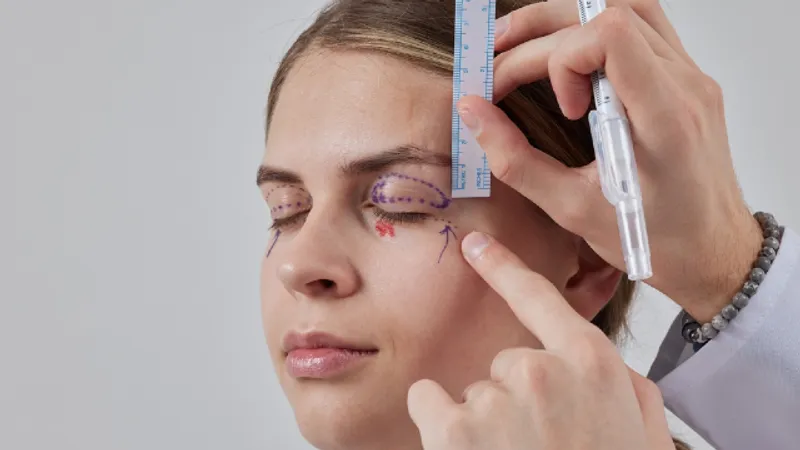
The Same Complaint, Two Different Origins
Everything here follows from one distinction, so it is worth stating plainly before anything else.
The clinic describes upper blepharoplasty as eyelid surgery that removes or repositions excess skin and, where appropriate, fat from the upper eyelids, to produce a smoother and more defined eyelid contour. The problem it is built for is described as age-related skin laxity, heaviness, or excess tissue around the upper eyelids.
It describes ptosis correction as a surgical procedure that addresses drooping eyelids by tightening the muscles that lift the eyelid, with the aim of improving both sight and appearance. And its candidate description is precise about cause: adults whose upper eyelids droop because of weakness in the eyelid-lifting muscle or its tendon, confirmed by examination.
So the two operations sit at different layers. One addresses what is lying on top of the lid. The other addresses the mechanism that raises it. A lid weighed down by loose skin and a lid that cannot lift itself look similar from the outside and are not the same problem underneath.
What the Examination Is Actually Measuring
You cannot settle this yourself in a mirror, and the clinic's published consultation descriptions show why.
For ptosis correction, the surgeon is described as evaluating eyelid drooping, eyelid movement, muscle function, and eye health in order to plan treatment. The procedure steps add more detail: the assessment covers eyelid position, levator muscle function, skin, and how far the lid has dropped, and the surgical approach follows from those findings. Depending on cause and severity, the surgeon strengthens or advances the lifting muscle, or uses another suitable technique.
For upper blepharoplasty, the evaluation is described as covering the upper eyelid skin, fat, muscle, the eyelid crease, and overall facial balance, alongside your concerns and desired outcome, in order to determine the approach and whether excess skin or fat needs removing.
Notice which word appears in the first list and not in the second: movement. Ptosis assessment measures what the lid does. Blepharoplasty assessment measures what the lid carries. That is the fork in the road, and it is measured, not eyeballed.
Reading Your Own Case Before the Consultation
You cannot diagnose yourself, but you can arrive with better information. The clinic's candidate descriptions give you the vocabulary.
Excess skin: the clinic describes upper blepharoplasty candidates as adults with excess, loose, or sagging upper-eyelid skin creating a heavy or hooded appearance, affecting the natural eyelid crease, or obstructing part of the upper or peripheral field of view. If you can lift the skin of the lid with a fingertip and the eye opens the way you remember it, that is skin behaving like skin.
Lifting mechanism: ptosis correction is described for drooping caused by eyelid-lifting muscle or tendon weakness. A lid that will not raise even when the skin above it is out of the way is behaving differently.
Both of these are observations to report, not conclusions to assert. Bring them as descriptions — "the lid feels heavy by evening," "one side sits lower than the other," "I lift my brows to see" — and let the assessment do the interpreting.
Why Getting This Wrong Costs More Than a Bad Result
It is worth being blunt about the consequence, because it is the reason the distinction matters to a patient rather than only to a surgeon.
Remove skin from a lid whose problem is the lifting muscle and the skin is gone but the lid still does not rise properly. Adjust a muscle that was working in a lid buried under excess skin and the mechanism was never the issue. In both cases the patient has undergone surgery, recovery, and — for an international patient — a flight, for a change aimed at the wrong layer.
That is why the clinic's framing for this whole category is worth taking seriously rather than reading as boilerplate: it describes selecting and combining eyelid procedures according to the patient's concerns, with emphasis on direct surgeon involvement and realistic treatment goals. Selection is the work. The operation is what happens after the selection is right.
The Risk Lists Describe What Each Operation Touches
Both are disclosed, and reading them side by side is another way to see the layers.
Upper blepharoplasty. Temporary swelling, bruising, tightness, dryness, irritation, or mild asymmetry can occur after surgery. Those are the effects of working on skin and the tissue immediately beneath it.
Ptosis correction. The published risks are asymmetry, under- or overcorrection, dry eyes, and recurrence. Under- and overcorrection are the vocabulary of an adjustment that can be set too little or too far — the language of a mechanism being tuned. Recurrence describes the lid drifting back toward where it started.
Dryness appears on both lists, and it deserves more attention than patients usually give it. MedlinePlus, the U.S. National Library of Medicine's consumer health service, explains what the tear film is for: every blink spreads tears across the surface, cleaning it and keeping it wet, which matters for sight as well as comfort. Problems can run in more than one direction — too many tears, too few, or drainage that is not working. Eyelid surgery operates on the structures doing the spreading, which is why both procedures name dryness and why an existing dry-eye history belongs in the consultation unprompted.
The clinic's own exclusions reinforce that. Severe dry-eye disease is named among the reasons a patient may not be suitable for upper blepharoplasty, alongside uncontrolled medical conditions, active eye or eyelid infections, and unrealistic expectations, with surgery also postponed for certain bleeding or healing problems until the patient is medically stable.
Recovery and How Long Each Result Holds
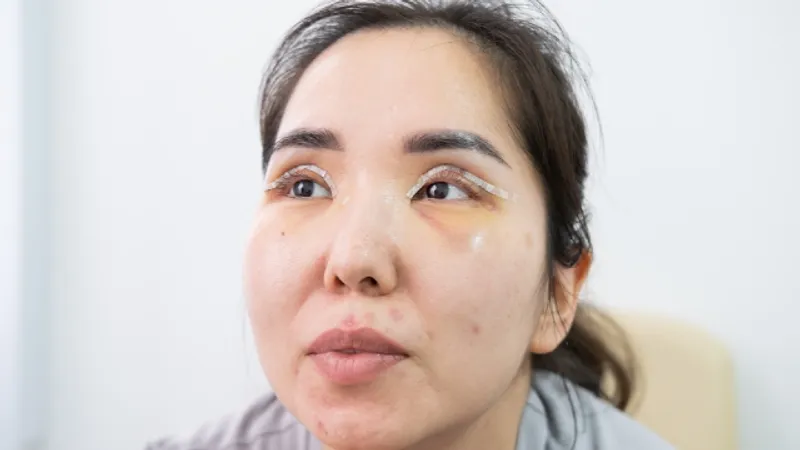
The published recovery descriptions are not the same, and the difference is informative.
After upper blepharoplasty, most patients return to light daily activities within several days. Swelling and bruising usually improve over one to two weeks, residual swelling settles gradually over several weeks, and the final contour continues to refine for a few months. The clinic also gives a longevity statement for this procedure: results are long-lasting, often five to seven years or longer and sometimes lifelong, while natural aging continues to relax the skin over time.
After ptosis correction, swelling and bruising may improve over several weeks, with the final result taking longer, and individual recovery varying. On longevity the clinic is more conditional: improvement becomes visible as swelling settles, and how long it lasts depends on eyelid function, aging, and individual factors.
That asymmetry is honest rather than evasive. Removing skin produces a change that aging then works on slowly. Adjusting a muscle produces a change that depends on how that muscle behaves afterward.
Operating time is published for one of the two: upper blepharoplasty typically takes about forty-five to sixty minutes and is usually an outpatient procedure with same-day discharge. For ptosis correction, duration and visit requirements are matters to confirm with the clinic.
Anesthesia
For upper blepharoplasty the clinic describes local anesthesia as common, with light sedation optional depending on the surgical plan and patient preference, and pain managed with local anesthetic during surgery and medication afterward. For ptosis correction, local anesthesia may be used, with sedation or other pain control depending on the plan, and the procedure steps note that anesthesia is given to keep the patient comfortable during surgery.
MedlinePlus distinguishes the terms usefully. A local anesthetic numbs a small area and you remain awake. Sedation, when added, reduces awareness without switching it off, and it is described in levels rather than as one experience. Asking which level your plan involves is worth doing, because it changes what the day feels like more than the choice between these two operations does.
What to Ask
- Based on your examination, is the lid position coming from the skin above it, the lifting mechanism, or both?
- What did you measure to reach that conclusion?
- If skin is the main finding, what happens to the lid position after the skin is addressed?
- Do I have any dry-eye history that changes your recommendation?
- What would under- or overcorrection look like in my case, and what is done about it?
MedlinePlus recommends preparing questions in advance, bringing a list of medicines, supplements, and allergies, and taking notes during the appointment — and being honest rather than saying what you think a clinician wants to hear.
StatPearls describes informed consent as a process of discussion rather than a form: the nature of the intervention, the balance of its risks and benefits, and the alternatives available, with refusal and later withdrawal both open to the patient. Here the alternatives are concrete: the other operation, both, or neither for now.
Descriptions like those are easier to set down in writing than to produce across a table, and the practice takes written enquiries at its contact page. Accounts from earlier patients are gathered on the customer reviews page.
The Bottom Line
- The two operations address different layers: upper blepharoplasty removes or repositions excess upper-eyelid skin and, where appropriate, fat, while ptosis correction tightens the muscle that lifts the lid.
- Candidacy follows cause. The clinic describes blepharoplasty candidates by excess, loose, or sagging skin creating a hooded appearance, and ptosis candidates by weakness in the eyelid-lifting muscle or tendon.
- The ptosis assessment measures eyelid movement and levator function; the blepharoplasty assessment measures skin, fat, muscle, crease, and facial balance.
- Risk vocabulary differs accordingly: under- and overcorrection and recurrence for the muscle procedure, and swelling, bruising, tightness, dryness, irritation, or mild asymmetry for the skin procedure.
- Dryness appears on both lists, and severe dry-eye disease is named among the reasons upper blepharoplasty may not be suitable.
Frequently Asked Questions
What is the difference between the two procedures?
Upper blepharoplasty removes or repositions excess skin and, when appropriate, fat from the upper eyelid. Ptosis correction tightens the muscles that lift the eyelid. One addresses what sits on the lid; the other addresses what raises it.
How does the surgeon decide which I need?
By examination. For ptosis correction the clinic describes assessing eyelid position, levator muscle function, skin, and the degree of drooping. For upper blepharoplasty it describes assessing eyelid skin, fat, muscle, the crease, and facial balance.
Can I tell which one I need myself?
No, but you can describe what you notice — whether the lid feels heavy, whether one side sits lower, whether lifting the skin with a fingertip changes what you see. Those are observations for the consultation, not conclusions.
Can both be done together?
That is a question for the surgeon who examines you. The clinic describes its approach to eyelid surgery as selecting and combining procedures according to the patient's concerns, determined by individual assessment.
What are the risks of each?
For upper blepharoplasty: temporary swelling, bruising, tightness, dryness, irritation, or mild asymmetry. For ptosis correction: asymmetry, under- or overcorrection, dry eyes, and recurrence.
How long is the recovery?
After upper blepharoplasty most patients return to light activities within several days, with swelling and bruising usually improving over one to two weeks. After ptosis correction the clinic describes swelling and bruising improving over several weeks, with the final result taking longer.
How long do the results last?
The clinic describes upper blepharoplasty results as long-lasting, often five to seven years or longer and sometimes lifelong, with natural aging continuing. For ptosis correction it says longevity depends on eyelid function, aging, and individual factors.
This article is for general informational purposes and does not constitute individualized medical advice, and it is not a self-diagnosis tool. Surgical candidacy, technique, and expected outcomes can only be determined through a consultation with a qualified plastic surgeon.
References & Sources
- MedlinePlus — Eyelid Disorders
- MedlinePlus — Tears
- MedlinePlus — Anesthesia
- MedlinePlus — Talking With Your Doctor
- StatPearls — Informed Consent
Schedule a 1:1 Consultation with Dr. Ju-Chan Kim
Have questions about recovery time, surgical planning, or transparent pricing in Busan? Contact our international patient team today.
Book Consultation →