
Upper Blepharoplasty for Middle-Age Patients: A Full Guide
The incision sits inside the natural crease and the work is measured in small amounts. Here is the published picture of upper blepharoplasty at IBON Plastic Surgery.
Upper Blepharoplasty for Middle-Age Patients: Procedure and Recovery Guide
Medically reviewed by Dr. Kim Ju-Chan, Board-Certified Plastic Surgeon
There is a detail in IBON Plastic Surgery's description of this operation that tells you most of what you need to know about its character: the incision is placed within the natural crease of the upper eyelid, and what is taken is described in small amounts. This is not an operation of large removals. It is a measured one, performed along a line the lid already has — and its published risk list, recovery timeline, and longevity statement all follow from that.
What the Operation Does
The clinic describes upper blepharoplasty as eyelid surgery that removes or repositions excess skin and, where appropriate, fat from the upper eyelids, to create a smoother and more defined eyelid contour. It is described as addressing age-related skin laxity, heaviness, or excess tissue around the upper eyelids while aiming to keep a natural appearance.
Patients are described as seeking it for age-related upper-eyelid skin laxity, excess skin, or eyelid heaviness, and for a more refreshed, natural-looking eye appearance. International patients are also described as choosing it for access to experienced eyelid surgeons and individualized surgical planning.
Who Is a Candidate
The candidate description is one of the more specific on the clinic's menu.
Adults with excess, loose, or sagging upper-eyelid skin that creates a heavy or hooded appearance, affects the natural eyelid crease, or obstructs part of the upper or peripheral field of view.
Three consequences of one change, and the third belongs in a different conversation from the first two. A lid encroaching on what you can see is a functional finding, and it is worth saying so explicitly at the consultation if that is part of why you are there.
Who Should Wait or Reconsider
The exclusion list names patients with uncontrolled medical conditions, active eye or eyelid infections, severe dry-eye disease, or unrealistic expectations, adding that surgery may be postponed for certain bleeding or healing problems until the patient is medically stable.
Severe dry-eye disease appearing by name is the item to take seriously. MedlinePlus, the U.S. National Library of Medicine's consumer health service, explains what the tear film does: blinking spreads tears across the surface of the eye, keeping it clean and moist, which matters for sight as much as for comfort. Problems can run in several directions — too many tears, too few, or drainage that is not working.
An operation on the upper lid changes the structure doing part of that spreading. If your eyes are already dry, raise it early.
The Published Steps
Five movements, and the first two decide the rest.
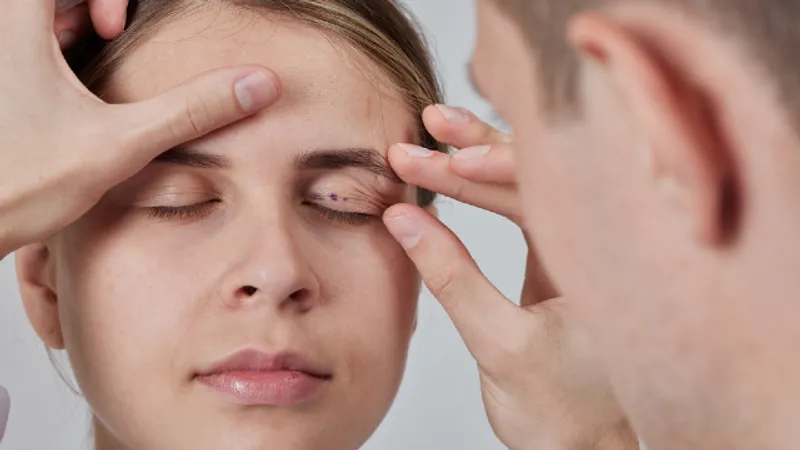
Consultation and marking. The surgeon assesses the upper eyelids and marks the planned incision against eyelid anatomy and the desired result.
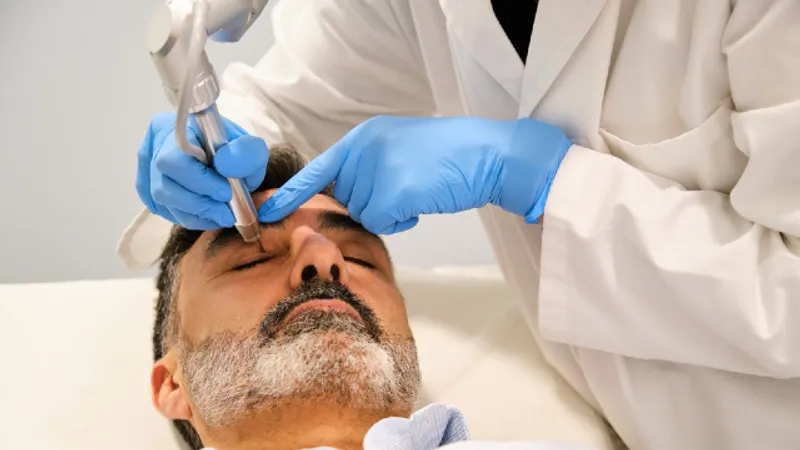
Anesthesia. Local anesthesia is commonly used, with sedation if needed.
Incision. A carefully placed incision is made within the natural crease of the upper eyelid.
Tissue adjustment. Excess skin and, when appropriate, small amounts of fat or muscle are removed or repositioned.
Crease refinement. The surgeon adjusts the eyelid to refine the crease.
The word within in step three is load-bearing. An incision placed inside a fold the lid already makes is an incision that sits where the lid closes — which is why the scar language for this procedure is comparatively quiet.
What the Assessment Covers
The surgeon is described as evaluating the upper eyelid skin, fat, muscle, the eyelid crease, and overall facial balance, alongside the patient's concerns and desired outcome, followed by an assessment determining the approach and whether excess skin or fat removal is needed.
Notice the last clause. Whether fat is addressed at all is a finding rather than a standard part of the operation.
Anesthesia in More Detail
The clinic describes the procedure as commonly performed under local anesthesia with optional light sedation depending on the surgical plan and patient preference. Pain is generally managed with local anesthetic during surgery and prescribed or recommended medication afterward.
MedlinePlus explains the categories: a local anesthetic numbs a limited area while you remain awake, and sedation added to it is graded rather than absolute. Patient preference appearing in the clinic's sentence is worth noticing — it suggests there is a conversation to have rather than a fixed arrangement to accept.
What Can Go Wrong
The disclosed effects for this procedure are temporary swelling, bruising, tightness, dryness, irritation, or mild asymmetry.
That is a short list by the standards of this menu, and the qualifiers matter: temporary and mild. Dryness and irritation appear for the reason discussed above.
As with any operation, the general surgical hazards apply and the clinic's aftercare instruction names what should prompt contact rather than patience: severe pain, sudden vision changes, excessive bleeding, or signs of infection.
Recovery, Stage by Stage
The published description separates the stages more clearly than most.
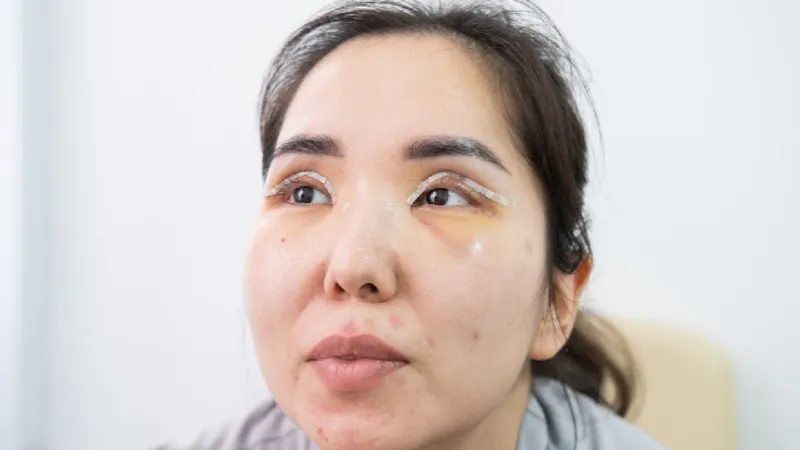
Most patients return to light daily activities within several days. Swelling and bruising usually improve over one to two weeks. Residual swelling settles gradually over several weeks. The final eyelid contour may continue to refine for a few months.
The results row adds a figure: initial swelling and bruising usually improve within ten to fourteen days, with the eyelids continuing to settle over the following weeks to months and final results becoming more apparent within several weeks.
Four stages, and the gap between the first and last is the part patients misjudge. Days to function; a fortnight to look ordinary; months to be finished.
Operating time is given as about forty-five to sixty minutes, usually as an outpatient procedure with same-day discharge.
How Long It Holds
This is one of the few procedures where the clinic publishes a duration, and it is worth quoting accurately: results are long-lasting, often five to seven years or longer and sometimes lifelong, although natural aging can gradually cause further skin laxity over time.
Two halves again. A durable result, and a process that continues. Neither cancels the other.
Preparation and Aftercare
Preparation is described as a consultation assessing eyelid anatomy, skin and tissue condition, medical history, and desired results, then following the surgeon's instructions on medications, supplements, smoking, alcohol, fasting, and skincare. Patients are asked to organize a way home in advance and to avoid makeup or eye-area products on the day.
Aftercare is more detailed than for several neighboring procedures: keep the surgical area clean, use prescribed medications as directed, and apply cold compresses during the initial recovery period to help reduce swelling and bruising. Avoid rubbing or straining the eyes, heavy exercise, and activities that increase pressure around the eyes until the surgeon clears them. Attend the scheduled follow-up visits.
MedlinePlus sets the ordinary expectation for the period afterward — discomfort is usual, with swelling and soreness around the treated area — and suggests asking your own clinician what to expect and when normal activity becomes reasonable again.
Why "Small Amounts" Is the Operative Phrase
Step four says excess skin and, when appropriate, small amounts of fat or muscle are removed or repositioned. That qualifier is worth dwelling on, because patients often arrive expecting the opposite.
The instinct is that more removal produces a better result. On the upper lid it does not. A lid stripped of too much skin cannot close comfortably, and the clinic's own exclusion list — which postpones surgery for certain healing problems — reflects how little margin there is to work with.
So the surgical judgment here is about restraint rather than ambition, which is also why the assessment ends by determining whether fat or skin removal is needed rather than assuming both.
For you the practical version is a question: how much are you taking, and what is the margin? A surgeon who answers in terms of what must remain has thought about it in the right direction.
The Functional Question Hiding in the Candidacy
One clause in the candidate description sits apart from the others: skin that obstructs part of the upper or peripheral field of view.
That is not a statement about appearance. It describes a lid interfering with sight, which is a different kind of finding and a different kind of reason to operate.
Two practical consequences. If you find yourself lifting your brows to see, or noticing that the top of your visual field has narrowed, mention it plainly — it is information the assessment uses. And if the finding is partly functional, the conversation about what success looks like should include how the eye works, not only how it looks.
The clinic's material keeps both purposes in view throughout this category, describing the aim as a smoother and more defined contour while addressing heaviness and excess tissue. Reading only the aesthetic half of that sentence leaves out the part that may matter most.
Questions Worth Asking
- How much skin are you planning to remove, and how did you decide the amount?
- Will fat or muscle be addressed, or only skin?
- Where exactly will the incision sit, and what will the line look like at three months?
- Do I have any dry-eye history that changes your recommendation?
- Is part of my finding functional — does the lid affect what I can see?
StatPearls describes consent as a discussion covering what the intervention involves, how its risks weigh against its benefits, and what alternatives exist. Here they include treating the brow instead, addressing lid position rather than skin, or waiting. MedlinePlus recommends writing your questions down beforehand and taking notes during the appointment.
Enquiries go to the practice at its contact page. Results it has chosen to publish sit on the before-and-after page — cases somebody selected, which is not the same as an average.
The Bottom Line
- The operation removes or repositions excess upper-eyelid skin and, where appropriate, small amounts of fat or muscle, through an incision placed within the natural crease.
- Candidacy is described by excess, loose, or sagging skin creating a heavy or hooded appearance, affecting the crease, or obstructing part of the upper or peripheral field of view.
- Severe dry-eye disease is named among the reasons a patient may not be suitable.
- Operating time is about forty-five to sixty minutes, usually outpatient with same-day discharge.
- Recovery runs in stages — light activity within several days, swelling improving over one to two weeks, residual swelling over several weeks, and the contour refining for a few months.
Frequently Asked Questions
What does upper blepharoplasty involve?
Removing or repositioning excess upper-eyelid skin and, where appropriate, small amounts of fat or muscle, through an incision placed within the natural crease, followed by refinement of the crease.
Who is a candidate?
Adults with excess, loose, or sagging upper-eyelid skin creating a heavy or hooded appearance, affecting the natural eyelid crease, or obstructing part of the upper or peripheral field of view.
Who should not have it?
Patients with uncontrolled medical conditions, active eye or eyelid infections, severe dry-eye disease, or unrealistic expectations, with surgery possibly postponed for certain bleeding or healing problems.
How long does it take?
About forty-five to sixty minutes, usually as an outpatient procedure allowing a return home the same day.
What is the recovery like?
Light daily activities within several days, swelling and bruising usually improving over one to two weeks, residual swelling settling over several weeks, and the final contour refining for a few months.
How long do results last?
The clinic describes them as long-lasting, often five to seven years or longer and sometimes lifelong, while natural aging continues to relax the skin over time.
What are the risks?
Temporary swelling, bruising, tightness, dryness, irritation, or mild asymmetry. The aftercare instruction names severe pain, sudden vision changes, excessive bleeding, or signs of infection as reasons to seek attention.
This article is for general informational purposes and does not constitute individualized medical advice, and it is not a self-diagnosis tool. Surgical candidacy, technique, and expected outcomes can only be determined through a consultation with a qualified plastic surgeon.
References & Sources
- MedlinePlus — Eyelid Disorders
- MedlinePlus — Tears
- MedlinePlus — Anesthesia
- MedlinePlus — After Surgery
- StatPearls — Informed Consent
Schedule a 1:1 Consultation with Dr. Ju-Chan Kim
Have questions about recovery time, surgical planning, or transparent pricing in Busan? Contact our international patient team today.
Book Consultation →