
Thread Lift vs Fat Grafting: Holding Versus Filling
One suspends tissue, the other replaces volume. Comparing how long they last is comparing two different jobs — here is what IBON Plastic Surgery publishes.
Thread Lift vs Fat Grafting: Comparing Longevity and What Each Procedure Does
Medically reviewed by Dr. Kim Ju-Chan, Board-Certified Plastic Surgeon
The question patients bring to this comparison is almost always the same: which one lasts longer? It is a reasonable question and it has a problem inside it. At IBON Plastic Surgery these two sit together in the anti-aging category, but they do different jobs — one holds tissue in a lifted position, the other replaces lost volume — and the published language about how long each holds is written in terms that do not line up. Before comparing durations, it is worth knowing what each duration is measuring.
One more thing to settle at the start, because the phrase travels widely: fat grafting is not a non-surgical treatment. The clinic describes fat being collected by liposuction from an area such as the abdomen or the thighs before it is transferred, and it lists local anesthesia, sedation, or general anesthesia as possibilities depending on the extent of the work. Whatever else it is being compared with, it belongs in the surgical column.
Two Different Jobs
Take the published descriptions on their own terms first.
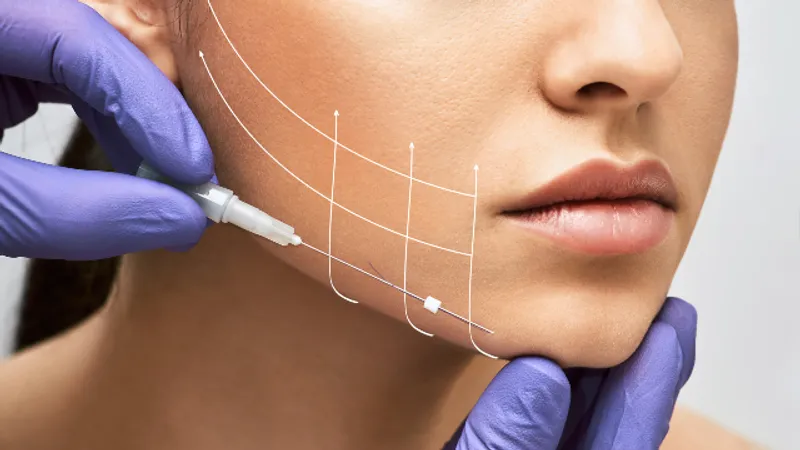
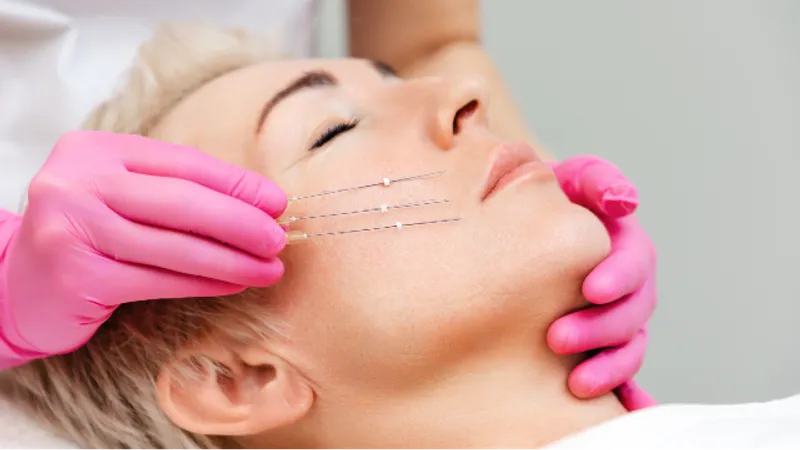
Thread lift is described as a minimally invasive lifting procedure that places medical threads beneath the skin to support and lift sagging facial tissue, commonly used to improve facial contours and produce a more defined, refreshed appearance. Its steps are marking the treatment areas, applying local anesthetic, preparing small entry points, inserting threads with a needle or cannula, positioning and adjusting them to create the planned lift, then closing or allowing the entry points to heal.
Fat grafting is described as taking the patient's own fat — typically collected by liposuction from areas such as the abdomen or thighs — and transferring it elsewhere to restore volume and improve contour. Its steps run from planning and marking, through anesthesia, harvesting, processing and purification of the fat, careful injection into the target area, and a final assessment with aftercare instructions.
Support versus substance. Threads act on tissue that is already there by holding it somewhere else; grafted fat adds material that was not there. Those are different mechanisms, and they age differently for reasons that follow directly from the mechanism.
Why "Which Lasts Longer" Does Not Have a Head-to-Head Answer
Now put the two longevity statements next to each other, because this is the heart of it.
For thread lift, the clinic says an initial lifting effect may be visible soon after treatment, that swelling settles gradually while collagen-related effects develop over subsequent weeks or months, and that longevity varies considerably according to the thread type, the treatment area, and individual factors.
For fat grafting, it says results change as postoperative swelling resolves and some of the transferred fat is naturally resorbed, that the remaining viable fat can provide longer-term volume, and that the amount retained varies considerably between patients.
Read closely, those two sentences are not measuring the same thing. The thread statement describes how long a lift holds. The fat statement describes how much volume survives and then persists. A patient asking which lasts longer is asking a single question of two different clocks.
There is a more precise way to put the difference. With threads, what changes over time is the position of tissue that remains yours. With grafted fat, what changes is how much of the transferred material stays — some is resorbed, and what is retained is described as providing longer-term volume. One is about a position slipping; the other is about a quantity settling. Neither number is published as a duration, and no clinic can give you one honestly without describing your own anatomy first.
Candidacy Is the Real Separator
If durability will not choose for you, candidacy will, and here the published language is direct.
Thread lift candidates are described as adults with mild to moderate skin laxity who want subtle lifting and contour enhancement without conventional facelift surgery. The exclusion is just as clear: patients with significant skin excess or advanced facial sagging may not achieve the desired result with threads alone. Active skin infection, certain bleeding disorders, or conditions affecting healing may also mean postponement or unsuitability.
Fat grafting candidates are described as adults with adequate donor fat, realistic expectations, and a specific area needing volume or contour correction, with good general health and stable weight preferred. Its exclusions name insufficient donor fat, uncontrolled medical conditions, active infection at either the treatment or the donor site, and unrealistic expectations.
Two of those preconditions are worth pulling out because patients never anticipate them. Fat grafting needs somewhere to take fat from — "adequate donor fat" is a genuine requirement, and a very lean patient may not have it. And stable weight is preferred for a reason that follows from what grafted fat is: living tissue that behaves like the rest of your fat afterward.
What Each One Risks
Both lists are published, and each one describes its own mechanism.
Thread lift. Temporary swelling, bruising, tenderness, tightness, asymmetry, dimpling, or irregularities may occur. Less common complications include infection, thread visibility or palpability, thread migration or extrusion, nerve or tissue injury, and unsatisfactory results. Three of those — visibility, palpability, migration — exist only because there is a foreign object under the skin doing the holding.
Fat grafting. Swelling, bruising, soreness, temporary numbness, contour irregularity, asymmetry, infection, bleeding, fat resorption, fat necrosis, and the need for revision can occur, with the clinic adding that rare but serious complications are possible depending on the treatment area and technique. Resorption appears here as a risk as well as a normal process, which is an honest way to list it: some is expected, and more than expected is a disappointment.
The contrast is clean. One procedure's characteristic problems are about the implant-like object. The other's are about biological material that has to survive a transfer.
Recovery and What the Day Looks Like
The two are not in the same class here either.
Thread lift is described as usually performed with local anesthesia, often as an outpatient procedure in a single session, with follow-up as recommended and the exact treatment time depending on the number and location of threads. Recovery is described as mild swelling, bruising, tightness, or tenderness over the first several days, with most routine activities resuming gradually on the clinician's instructions, while strenuous activity and excessive facial manipulation may need to wait.
Fat grafting's anesthesia is described as local, sedation, or general depending on the treatment area and extent, with discomfort afterward managed by prescribed or recommended medication. Its recovery is described as swelling and bruising during the early period, with many patients returning to normal activities over several days to a few weeks depending on the area and the extent of surgery. Its duration depends on how much fat is harvested, how many areas are treated, and whether it is combined with eyelid or other surgery.
MedlinePlus, the U.S. National Library of Medicine's consumer health service, is worth reading on the anesthesia vocabulary, because the gap between the two procedures is widest here. A local anesthetic numbs a small area and leaves you fully awake. Sedation is added separately and comes in degrees rather than as one state. General anesthesia is different again. Ask which applies, and if sedation is involved, ask at what level and who is monitoring it.
MedlinePlus also sets a sensible baseline for any procedure: some discomfort is usual, and swelling and soreness around the treated area are expected. Its practical advice is to ask your own clinician which effects to expect in your case, when you can return to work, and when exercise is reasonable again — questions worth asking here because the two answers differ.

Combining Them Is a Question, Not an Assumption
Patients sometimes arrive assuming these two are naturally done together — lift and fill in one visit. The clinic's published material treats fat grafting's duration as depending partly on whether it is combined with eyelid or other surgery, which tells you combination is a real scenario. It does not tell you it is the default for you.
The useful question is what each element is being asked to do. If the finding is laxity, a lift addresses it; if the finding is lost volume, filling addresses it. A patient with both may be offered both. A patient with one who receives both has taken on a second recovery and a second risk list for a change the assessment did not call for.
That is also the right frame for the clinic's stated position against unnecessary and over-treatment: it applies to how many things are done in one sitting, not only to how much of each is used.
What to Ask
- Is my main finding laxity, lost volume, or both — and what did you look at to decide?
- If threads are recommended, what happens as the lift relaxes, and what are the options then?
- If fat grafting is recommended, how much resorption should I expect, and at what point is the result stable?
- Do I have adequate donor fat, and where would it be taken from?
- Is my weight stable enough for a graft to behave predictably?
MedlinePlus recommends writing questions down beforehand, bringing a list of medicines, supplements, and allergies, and taking notes during the appointment rather than relying on memory. StatPearls describes consent as a discussion covering what the procedure involves, how risks weigh against benefits, and what the alternatives are, with refusal and later withdrawal both available. Here the alternatives are concrete: the other procedure, both, or neither.
If you want the plan on paper before committing to it, the practice takes written enquiries at its contact page, and accounts from people it has already treated are published on the customer reviews page.
The Bottom Line
- These are different jobs, not two speeds of one treatment: threads support and lift tissue that is already there; grafted fat adds volume taken from the patient's own body.
- Fat grafting is surgery — the fat is harvested by liposuction, and anesthesia may be local, sedation, or general depending on extent.
- The longevity statements are not comparable head to head. Thread longevity is described as varying with thread type, area, and individual factors; fat grafting results depend on how much of the transferred fat is resorbed and how much is retained.
- Candidacy separates them more usefully than durability: threads are described for mild to moderate laxity and may not satisfy patients with significant skin excess, while grafting requires adequate donor fat and prefers stable weight.
- The characteristic risks follow the mechanism — thread visibility, palpability, or migration on one side; resorption, fat necrosis, and possible revision on the other.
Frequently Asked Questions
Which one lasts longer?
The published statements do not support a head-to-head answer. Thread lift longevity is described as varying considerably with thread type, treatment area, and individual factors. For fat grafting, some transferred fat is naturally resorbed and the retained portion is described as providing longer-term volume, with the amount varying between patients.
Is fat grafting non-surgical?
No. The fat is harvested by liposuction from an area such as the abdomen or thighs, and anesthesia may be local, sedation, or general depending on the treatment area and extent.
Who is a good candidate for a thread lift?
Adults with mild to moderate skin laxity who want subtle lifting and contour enhancement without conventional facelift surgery. The clinic notes that patients with significant skin excess or advanced sagging may not achieve the desired result with threads alone.
Who is a good candidate for fat grafting?
Adults with adequate donor fat, realistic expectations, and a specific area needing volume or contour correction. Good general health and stable weight are preferred.
What are the risks specific to each?
For threads: thread visibility or palpability, migration or extrusion, nerve or tissue injury, alongside temporary swelling, bruising, tenderness, dimpling, or irregularities. For grafting: fat resorption, fat necrosis, contour irregularity, and the possible need for revision, alongside swelling, bruising, soreness, and numbness.
How long does each take?
Thread lift is often a single outpatient session, with the exact time depending on the number and location of threads. Fat grafting depends on the amount of fat harvested, the number of areas, and whether it is combined with other surgery.
Can I have both?
It is a question for the consultation rather than an assumption. The clinic's material treats fat grafting as something that may be combined with eyelid or other surgery, and states a policy against unnecessary and over-treatment.
This article is for general informational purposes and does not constitute individualized medical advice, and it is not a self-diagnosis tool. Surgical candidacy, technique, and expected outcomes can only be determined through a consultation with a qualified plastic surgeon.
References & Sources
- MedlinePlus — Plastic and Cosmetic Surgery
- MedlinePlus — Anesthesia
- MedlinePlus — Surgery
- MedlinePlus — Talking With Your Doctor
- StatPearls — Informed Consent
Schedule a 1:1 Consultation with Dr. Ju-Chan Kim
Have questions about recovery time, surgical planning, or transparent pricing in Busan? Contact our international patient team today.
Book Consultation →