
Thread Lift, Fat Grafting and V-RO Lifting: Three Mechanisms
One category heading covers three unrelated mechanisms — support, volume replacement, and an energy device. Here is what each one is, at IBON Plastic Surgery.
Thread Lift, Fat Grafting, and V-RO Lifting: A Guide to the Anti-Aging Options
Medically reviewed by Dr. Kim Ju-Chan, Board-Certified Plastic Surgeon
IBON Plastic Surgery groups three treatments under one heading, and the heading does more harm than good if you read it as a menu of similar options. Threads support tissue that is already there. Grafted fat replaces volume that has gone. V-RO lifting works with an energy device and places nothing at all. Three mechanisms, not three strengths of one idea — and the session patterns, recovery, and disclosed risks differ accordingly. This guide takes them one at a time.
Thread Lifting: Support
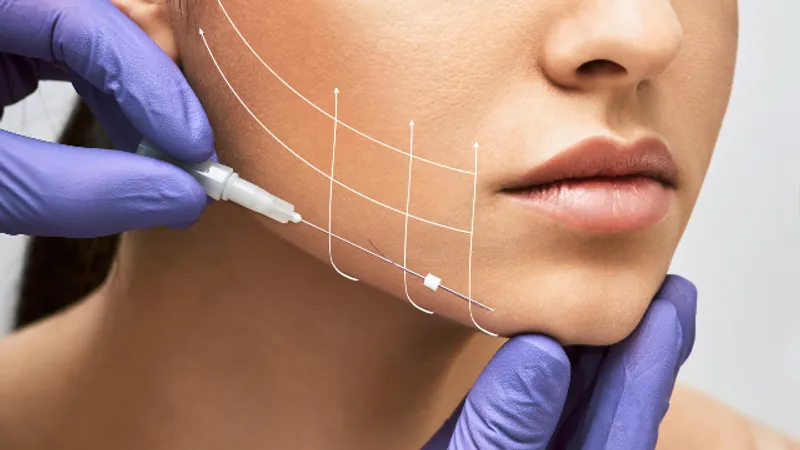
The clinic describes thread lifting as a minimally invasive lifting procedure that uses medical threads placed beneath the skin to provide support and lift sagging facial tissues, commonly used to improve facial contours and produce a more defined, refreshed appearance.
Who it suits. Adults with mild to moderate skin laxity who want subtle lifting and contour enhancement without conventional facelift surgery.
Who it does not. Patients with significant skin excess or advanced facial sagging may not achieve the desired result with threads alone. Active skin infection, certain bleeding disorders, or conditions affecting healing may also require postponement.
What happens. Treatment areas are marked, local anesthetic is applied, small entry points are prepared, threads are inserted with a needle or cannula, positioned and adjusted to create the planned lift, and the entry points are closed or allowed to heal.
What can follow. Temporary swelling, bruising, tenderness, tightness, asymmetry, dimpling, or irregularities. Less commonly: infection, thread visibility or palpability, thread migration or extrusion, nerve or tissue injury, and unsatisfactory results.
Three of those exist only because something has been placed under the skin. That is the signature of a support mechanism.
Timing. Often an outpatient procedure in a single session, with follow-up as recommended and treatment time depending on the number and location of threads. An initial lifting effect may be visible soon after treatment, while swelling settles and collagen-related effects develop over subsequent weeks or months. Longevity varies considerably according to thread type, treatment area, and individual factors.

Fat Grafting: Replacement
The clinic describes fat grafting as using the patient's own fat, typically collected by liposuction from areas such as the abdomen or thighs, and transferring it elsewhere to restore volume and improve contour.
Before anything else: this is surgery. Fat is harvested by liposuction, and anesthesia may be local, sedation, or general depending on the treatment area and extent. Its presence under an anti-aging heading does not change that.
Who it suits. Adults with adequate donor fat, realistic expectations, and a specific area needing volume enhancement or contour correction, with good general health and stable weight preferred.
Who it does not. Patients with insufficient donor fat, uncontrolled medical conditions, active infection at the treatment or donor site, or unrealistic expectations.
What happens. Treatment planning and marking; anesthesia appropriate to the procedure; fat harvesting by liposuction; processing and purification; careful injection into the target area; final assessment and aftercare instructions.
What can follow. Swelling, bruising, soreness, temporary numbness, contour irregularity, asymmetry, infection, bleeding, fat resorption, fat necrosis, and the possible need for revision, with rare but serious complications possible depending on area and technique.
The honest part. Some transferred fat is naturally reabsorbed, so the final volume can differ from the initial postoperative appearance. The remaining viable fat can provide longer-term volume, but the amount retained varies considerably between patients.
Timing. Duration depends on how much fat is harvested, how many areas are treated, and whether it is combined with eyelid or other surgery. Swelling and bruising are common early, with many patients returning to normal activities over several days to a few weeks.
V-RO Lifting: An Energy Device
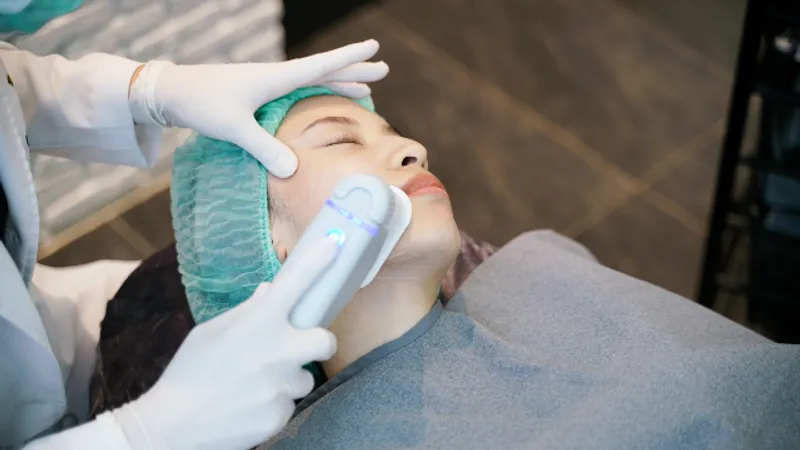
V-RO lifting is the clinic's non-surgical route to a lifted appearance, and unlike the two above it introduces nothing into the face. Planning is described as individualized to the state of the skin.
Who it suits. Adults with mild-to-moderate facial laxity or loss of contour, with realistic expectations, suitable for the specific lifting method used.
Who should be assessed carefully first. Patients with certain medical conditions, active skin infections, significant untreated inflammation, or expectations a non-surgical lifting treatment cannot reasonably meet.
What happens. Facial assessment; treatment-area marking; skin preparation; application of the technique or device; adjustment according to the target areas; post-treatment assessment.
What can follow. Temporary redness, swelling, tenderness, bruising, or discomfort depending on technique. Anything more specific than that belongs in a direct question to the clinic.
Timing. One appointment at a time, with no downtime planned into it. How many appointments the plan contains is settled at consultation and turns on the state of your skin, how much laxity there is, and what you are trying to achieve. Recovery and how long results hold are both described as following from the protocol used.
Why the Three Cannot Be Ranked
Patients ask which is best, and the published material gives no basis for an answer — deliberately, because the question compares different things.
Threads address position: tissue that has descended is supported in a lifted position. Grafted fat addresses quantity: volume that has been lost is replaced with the patient's own tissue. The third route addresses neither by placement — nothing is inserted and nothing is transferred.
A face with good volume and some descent is a different problem from a face that has lost volume, and a treatment aimed at the wrong one produces a change nobody asked for.
So the useful question is not which treatment is strongest but which description matches what an examination finds. The clinic's assessment inputs differ accordingly: facial anatomy, skin laxity and tissue quality for threads; donor and recipient areas and skin and tissue quality for grafting; facial structure, skin laxity, tissue condition, goals, and medical history for V-RO lifting.
Sessions, Downtime, and the Commitment You Are Making
The three differ most in what you are agreeing to.
Thread lifting is often a single session, with follow-up as recommended.
Fat grafting is a surgical episode with a recovery measured in days to a few weeks, and a result that changes as some of the transferred fat is resorbed.
V-RO lifting is generally one session at a time, but the number recommended varies with your skin and goals — which makes the total course the thing to establish before the first appointment rather than after it.
That last point deserves emphasis. Ask for the whole recommended plan in sessions, at what intervals, and what would extend it. The clinic's stated policy of genuine products used in appropriate quantities, with unnecessary and over-treatment avoided, applies to how many appointments are scheduled as much as to anything else.
Combining Them
The published material does not present these as a package, and the assessment inputs above are procedure-specific. Where more than one finding is present, a combination may be discussed — and if it is, the question to ask is which finding each element addresses and what would change if one were left out.
MedlinePlus, the U.S. National Library of Medicine's consumer health service, sets the general expectation for any procedure: discomfort is usual, with swelling and soreness around the treated area, and the practical step is to ask your clinician what to expect in your own case and when normal activity becomes reasonable again. That advice covers all three of these, with different answers for each.
MedlinePlus also frames the patient's position as an entitlement to the information needed to decide, including risks and benefits, with the freedom to change your mind about consent at any time. Those protections describe United States law rather than Korean law, but the standard is a fair one to expect — and it matters most for anything sold as a course.
What None of the Three Is For
A short section, because it prevents a specific disappointment.
None of these three is described as addressing significant skin excess. Threads say so explicitly — patients with significant skin excess or advanced facial sagging may not achieve the desired result with threads alone. Grafting adds volume rather than removing tissue. The device places nothing and removes nothing.
Where the finding is a quantity of skin, the answer is on the surgical side of the clinic's menu, and a course of treatments from this category will not substitute for it.
The reverse is also worth saying. Where the finding is skin quality — texture, hydration, early fine lines — none of these three is aimed at that either; the clinic's petit category covers that ground with different treatments.
So this heading covers descent and volume, and it is worth knowing what sits outside it before booking anything within it.
Reading the Risk Lists Side by Side
Put the three disclosures next to each other and a pattern appears that is more useful than any individual item.
Each begins with the same ordinary group — swelling, bruising, tenderness, discomfort — because each involves doing something to the face and waiting for it to settle. That part is common and it fades.
Then each diverges according to what it did. The thread list names visibility, palpability, migration and extrusion, because a thread is an object that remains. The grafting list names resorption, fat necrosis, contour irregularity and possible revision, because transferred tissue has to survive. The third list stays with temporary surface effects, because nothing was left behind to misbehave.
Two conclusions follow, and both are practical.
First, a shorter list is not the same as a lower stake. It reflects a narrower mechanism, and a narrower mechanism addresses a narrower finding.
Second, the items that distinguish each treatment are the ones to ask about specifically. A general question about risk produces a general answer; asking what thread migration would look like on your face, or how much resorption to expect in your case, produces something you can use.
Questions Worth Asking
- Is my finding descent, lost volume, skin quality, or more than one?
- Which of these three is aimed at that finding, and why not the others?
- If fat grafting is recommended, do I have adequate donor fat and where would it come from?
- How many sessions does the plan contain, and what would extend it?
- What recovery should I plan for, and when is the result stable?
StatPearls describes consent as a discussion covering what the intervention involves, how its risks weigh against its benefits, and what the alternatives are. Here the alternatives sit on the same page as each other, which makes naming them straightforward.
Ask in writing before committing at the practice's contact page; how it describes planning treatment case by case is on the about us page.
The Bottom Line
- One heading covers three mechanisms: threads support tissue that is present, grafted fat replaces volume that has gone, and V-RO lifting works without placing anything at all.
- Fat grafting is surgery — fat is harvested by liposuction, and anesthesia may be local, sedation, or general.
- Thread candidacy is mild to moderate laxity, with significant skin excess or advanced sagging named as unlikely to be satisfied by threads alone.
- Fat grafting requires adequate donor fat and prefers stable weight, and some transferred fat is naturally reabsorbed.
- V-RO lifting is generally a single session with no planned downtime, while the number of sessions recommended varies with skin condition, laxity, and goals.
Frequently Asked Questions
Are these three versions of the same treatment?
No. Threads support tissue that is present, grafted fat replaces volume that has been lost, and V-RO lifting introduces nothing into the face. The mechanisms are unrelated.
Is fat grafting non-surgical?
No. Fat is harvested by liposuction from an area such as the abdomen or thighs, and anesthesia may be local, sedation, or general depending on the treatment area and extent.
Which one lasts longest?
The published material does not rank them. Thread longevity varies with thread type, area, and individual factors; fat grafting depends on how much transferred fat is retained; and for the third route, duration is described as depending on the protocol followed.
Who is not suitable for threads?
Patients with significant skin excess or advanced facial sagging may not achieve the desired result with threads alone, and active skin infection, certain bleeding disorders, or healing conditions may require postponement.
What do I need for fat grafting?
Adequate donor fat, realistic expectations, and a specific area needing volume or contour correction, with good general health and stable weight preferred.
How many V-RO sessions will I need?
It is generally a single session at a time, with the number recommended varying according to skin condition, degree of laxity, and treatment goals, and the schedule set during consultation.
What recovery should I expect?
Threads: mild swelling, bruising, tightness, or tenderness over the first several days. Fat grafting: swelling and bruising early, with normal activities over several days to a few weeks. V-RO lifting: generally no planned downtime, with recovery varying by technique.
This article is for general informational purposes and does not constitute individualized medical advice, and it is not a self-diagnosis tool. Treatment suitability and expected outcomes can only be determined through a consultation with a qualified plastic surgeon.
References & Sources
- MedlinePlus — Plastic and Cosmetic Surgery
- MedlinePlus — Anesthesia
- MedlinePlus — Surgery
- MedlinePlus — Patient Rights
- MedlinePlus — After Surgery
- StatPearls — Informed Consent
Schedule a 1:1 Consultation with Dr. Ju-Chan Kim
Have questions about recovery time, surgical planning, or transparent pricing in Busan? Contact our international patient team today.
Book Consultation →