
Lower Blepharoplasty: Procedure Guide and Recovery Timeline
Four measurements choose the route, and the recovery is published to the day. The full picture of lower blepharoplasty at IBON Plastic Surgery.

Lower Blepharoplasty: Procedure Guide and Recovery Timeline
Medically reviewed by Dr. Kim Ju-Chan, Board-Certified Plastic Surgeon
Most of IBON Plastic Surgery's recovery descriptions are written in ranges. This one is written to the day: swelling peaks inside forty-eight hours and subsides substantially within seven to ten days. That precision is unusual enough to be worth noticing, and it sits alongside an equally specific account of how the surgical route is chosen — from four measurements, only one of which is the fat everybody comes in talking about.
What the Operation Does
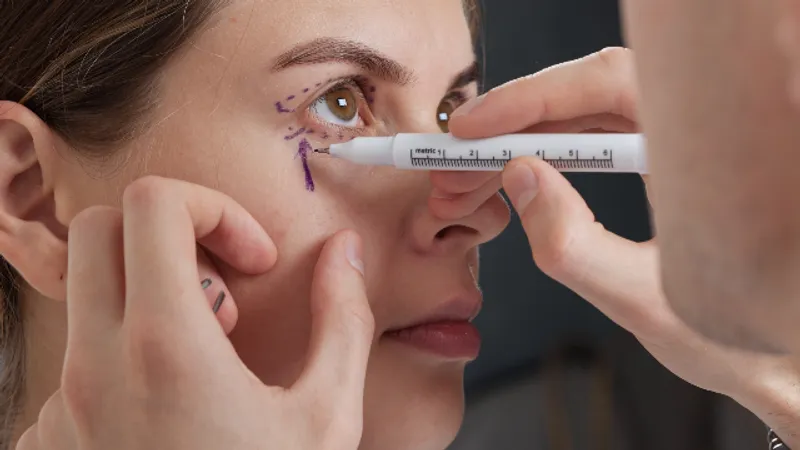
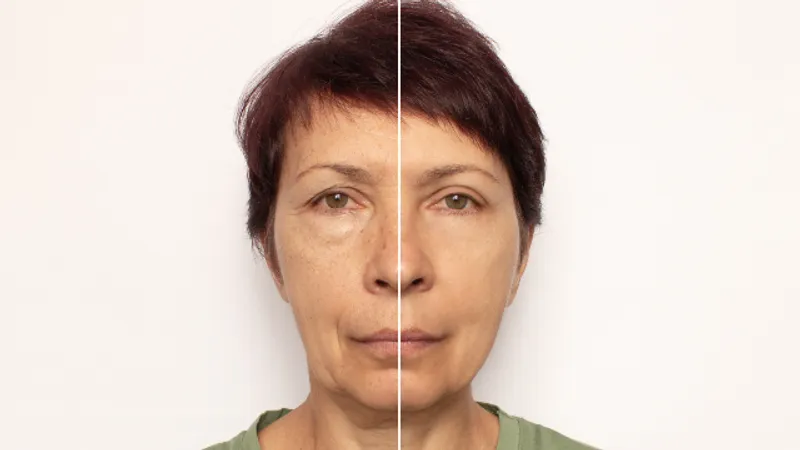
The clinic describes lower blepharoplasty as a surgical procedure that rejuvenates the lower eyelid area by removing or repositioning excess fat and, where appropriate, addressing loose skin and supporting tissues. It is described as designed to reduce the appearance of under-eye bags, puffiness, and age-related lower-eyelid changes while keeping a natural-looking contour.
U.S. patients specifically are described as seeking it to eliminate protruding under-eye fat pads and deep tear troughs that leave the face reading as tired, aged, or stressed.
Who Is a Candidate
Ideal candidates are described as individuals with bulging under-eye bags, pronounced tear-trough hollows, or loose lower-eyelid skin, who maintain healthy lower lid tone and have realistic aesthetic goals.
That middle clause is the precondition. Lid tone is a structural finding, and it appears again from the other direction in the exclusion list.
Who Should Not Have It
The clinic names individuals with severe dry eye syndrome, poor lower lid tendon laxity prone to the lid turning outward, active eye infections, or uncontrolled systemic illness as unsuitable for this surgery.
Two of those deserve a moment.
Lower lid tendon laxity. A lid whose anchoring is already loose is a lid with less capacity to hold its position after tissue has been removed from it. This is the same structural concern that appears in the candidate description as healthy lid tone, stated as an exclusion.
Severe dry eye syndrome. MedlinePlus, the U.S. National Library of Medicine's consumer health service, describes why the tear film matters: every blink spreads tears across the eye's surface, cleaning and moistening it, and that is a question of sight before comfort. Surgery on the lower lid works on structures that participate in that, which is why dryness appears both here and in the procedure's own risk list.
The Four Measurements That Choose the Route
This is the most useful passage in the published material and it is easy to miss.
The surgeon is described as evaluating under-eye skin quality, fat bulging severity, bone support structure, and lower lid skin elasticity, in order to choose between a transconjunctival and a subciliary incision technique.
Four inputs. One of them — fat bulging severity — is what the patient came in about. The other three are all about the envelope: how good the skin is, what is beneath it, and how well it springs back.
So the route is chosen from the container rather than from the contents. That is the single fact most likely to explain a recommendation you were not expecting.
The Published Steps
The surgeon marks the treatment area, then makes an incision either just below the lower lashes or inside the lower eyelid. Excess fat may be removed or repositioned, and loose skin or muscle can be adjusted as needed. The incision is closed, followed by routine postoperative care and monitoring.
Two things worth pulling out. The incision has two possible locations, which is the choice the four measurements settle. And fat may be repositioned rather than only removed — which matters where a bag above and a hollow below are the same problem seen twice.
Bags and Hollows Are Often One Problem
The candidate description names bulging under-eye bags and pronounced tear-trough hollows in the same breath, and patients usually read them as opposites — too much tissue in one place, too little in another.
They frequently are not opposites. A bulge above a hollow can be a single change seen from two angles: fat that has become prominent, with a depression immediately below it making the prominence read more strongly.
That is why the option to reposition fat rather than only remove it matters. Taking the bulge away addresses one half. Moving it into the depression below addresses both, and it uses tissue you already have.
Which approach suits a particular face is one of the things the four measurements inform — in particular the bone support beneath, which determines what the area under the bulge actually looks like.
It is a fair question to ask directly: are you removing this fat or moving it, and why that choice for me?
What the Two Routes Buy and Cost
The incision has two possible locations and the choice is not a matter of preference.
An incision just below the lashes is on the outside of the lid. It gives access to skin as well as fat, so loose skin and muscle can be adjusted — and it leaves a line on skin, which heals but exists.
An incision inside the lid reaches the fat without opening the outside at all. Nothing on the surface is disturbed, and nothing on the surface can be removed either.
So the trade is access against surface. Where the finding is fat alone in a lid with good skin, the internal route gives everything needed. Where skin is part of the problem, the external route is the one that can address it.
This is the practical meaning of the four measurements: three of them are asking whether skin needs to be part of the operation, and the answer selects the door.
Anesthesia
The clinic describes the procedure as conducted under local anesthesia paired with light intravenous sedation.
MedlinePlus explains what that combination means in practice: a local anesthetic numbs the area while sedation reduces awareness without producing full unconsciousness, and sedation comes in graded levels rather than as a single state. Recovery from sedation takes time, which is worth factoring into arrangements for the rest of the day.
What Can Go Wrong
The published risks are temporary bruising, mild swelling, minor asymmetry, temporary eye dryness, and rare lower lid retraction if excessive skin is removed.
The last item is the one to read carefully. Lid retraction is a change in where the lid sits — a functional outcome rather than a cosmetic imperfection — and the clinic ties it explicitly to taking too much skin.
That connection is the clearest possible argument for the restraint the four measurements are there to inform. The capacity to remove skin is also the capacity to remove too much, and the assessment exists to find the line.
Recovery, With Actual Numbers
Swelling and bruising peak within the first forty-eight hours and subside significantly within seven to ten days, allowing a return to social routines.
Smooth lower-lid contours become noticeable once swelling clears at one to two weeks, with stable results described as lasting for many years.
Operating time is about one to two hours, usually as an outpatient procedure with a return home the same day. A follow-up visit is commonly scheduled within five to ten days, for healing assessment and for removing sutures where non-dissolving ones were used.
For a patient planning a trip, that follow-up window is the number that sets the floor under the stay.
Preparation and Aftercare
Preparation is specific: patients are instructed to discontinue blood thinners, anti-inflammatory supplements, alcohol, and nicotine before surgery, to reduce swelling and support recovery. Any change to a prescribed medicine belongs with the doctor who prescribed it as well as with the surgeon.
Aftercare is equally concrete: cold compress therapy for two days, prescribed lubricating drops, avoiding heavy strain, and no eye makeup until the skin has healed.
Lubricating drops on that list are not incidental. They belong to the same tear-film concern that runs through the exclusion list and the risk list, and they are worth having before surgery day rather than after.
MedlinePlus sets the general expectation — discomfort is usual after a procedure, with swelling and soreness around the treated area — and suggests asking your own clinician what to expect in your case and when ordinary activity becomes reasonable again.
Reading the Precision in the Recovery Figures
It is worth asking why this procedure carries harder numbers than most of the menu, because the answer tells you how to use them.
Peak at forty-eight hours, substantially settled by seven to ten days, contours visible at one to two weeks: those are observations about the visible recovery, not promises about the result. The clinic pairs them with a much longer statement — stable results lasting for many years — which is a different measurement entirely.
Two practical uses follow. The short figures are for planning: when you can be seen, when the follow-up falls, when a return flight becomes reasonable to discuss. The long figure is for expectation: what you are buying is durable, and it will not be finished at the moment the swelling goes.
Where the published material is specific, take it seriously. Where it says recovery varies — as it does for several neighboring procedures — take that seriously too.
Questions Worth Asking
- Which route are you recommending, and which of the four measurements decided it?
- How much skin do you expect to remove, and what is the margin before retraction becomes a concern?
- Is my lower lid tone adequate, and how did you assess it?
- Will fat be removed, repositioned, or both?
- Will non-dissolving sutures be used, and therefore is a removal visit required?
StatPearls describes consent as a discussion of the intervention, its balance of risk and benefit, and the alternatives — here, the other incision route, a different lower-lid procedure, or waiting. MedlinePlus recommends preparing questions beforehand and taking notes during the appointment.
Written enquiries reach the practice at its contact page, and how it describes building a plan around one patient at a time is on the about us page.
The Bottom Line
- The operation removes or repositions excess fat and, where appropriate, addresses loose skin and supporting tissues in the lower eyelid.
- The route — below the lashes or inside the lid — is chosen from under-eye skin quality, fat bulging severity, bone support, and lid skin elasticity.
- Healthy lower lid tone is a candidacy requirement, and poor lid tendon laxity appears as an exclusion.
- Rare lower lid retraction is named and tied explicitly to removing excessive skin.
- Swelling peaks within forty-eight hours and subsides substantially by seven to ten days; surgery takes about one to two hours, with a follow-up commonly within five to ten days.
Frequently Asked Questions
What does lower blepharoplasty do?
It removes or repositions excess fat and, where appropriate, addresses loose skin and supporting tissues, to reduce the appearance of under-eye bags, puffiness, and age-related lower-eyelid changes.
How is the route chosen?
From four measurements — under-eye skin quality, fat bulging severity, bone support structure, and lower lid skin elasticity — which decide between an incision inside the lid and one just below the lashes.
Who is not suitable?
Individuals with severe dry eye syndrome, poor lower lid tendon laxity prone to the lid turning outward, active eye infections, or uncontrolled systemic illness.
What is lid retraction?
A change in where the lid sits, named as a rare risk and tied by the clinic to removing excessive skin. It is a functional outcome rather than a cosmetic one.
How long is the recovery?
Swelling and bruising peak within the first forty-eight hours and subside significantly within seven to ten days, with smooth contours noticeable once swelling clears at one to two weeks.
How long does surgery take, and how many visits?
About one to two hours, usually outpatient with same-day discharge, and a follow-up commonly within five to ten days for healing assessment and suture removal where applicable.
What should I do before and after?
Before: discontinue blood thinners, anti-inflammatory supplements, alcohol, and nicotine as instructed. After: cold compresses for two days, prescribed lubricating drops, no heavy strain, and no eye makeup until the skin has healed.
This article is for general informational purposes and does not constitute individualized medical advice, and it is not a self-diagnosis tool. Surgical candidacy, technique, and expected outcomes can only be determined through a consultation with a qualified plastic surgeon.
References & Sources
- MedlinePlus — Tears
- MedlinePlus — Eyelid Disorders
- MedlinePlus — Anesthesia
- MedlinePlus — After Surgery
- StatPearls — Informed Consent
Schedule a 1:1 Consultation with Dr. Ju-Chan Kim
Have questions about recovery time, surgical planning, or transparent pricing in Busan? Contact our international patient team today.
Book Consultation →